
-

Forging a Tanto from a Carriage Leaf Spring
Full Length Version **The heating time has been edited out and some of the tang work is missing due to battery issues. The blade shape is based on the Aizu Shintogo kata: islandblacksmith.ca/2014/04/aizu-shintogo-kunimitsu-tanto-kata/ Making the most of the fire, hammer, and anvil to prepare the steel to be refined and smoothed…read more about this foundational…
-

Sunahama Kotanto
This piece was named for the way the natural spalting design of the saya is reminiscent of an ink painting of waves washing on a sand covered shoreline. It also commemorates the fact that the woods used for the handle and saya are among the most recognizable of the West Coast woods, and the common…
-

Case Study: Making the Sunahama Kotanto
scroll down or jump to the sections below: Blade Sunobe Hizukuri Ara-shiage Hardening Clay Mixture Tsuchioki Yaki-ire Polishing Kaji Togi Shitaji Togi Habaki Forging Filing Bending Soldering Handle Seppa Nakago-ana Sokui Core Tsuka Tsukamaki Mekugi Scabbard Inside Outside Assembly Forging a Kotanto Blade A charcoal fire is used to heat the steel for shaping with…
-
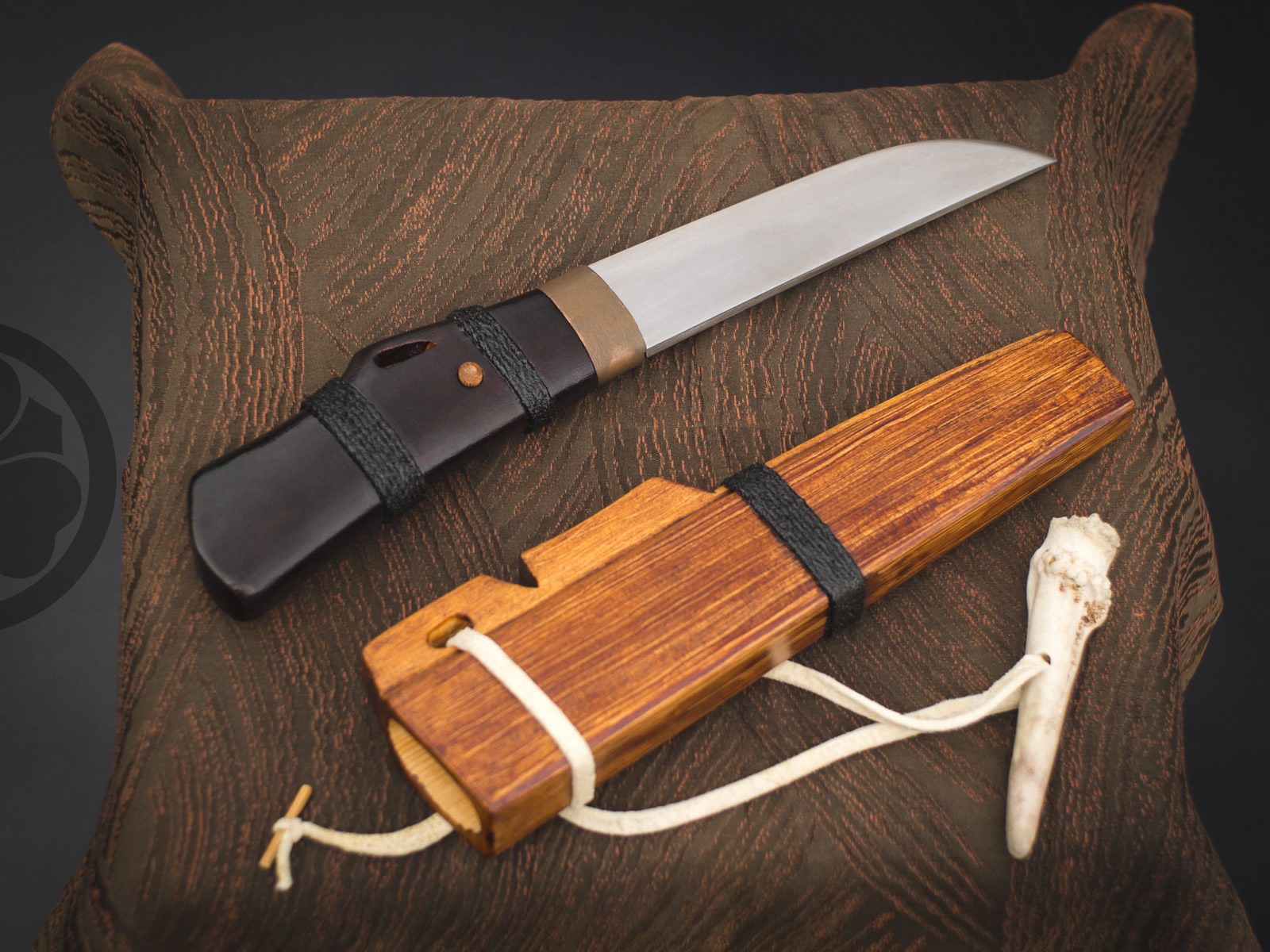
Makiri Style Kotanto
The makiri is one of the traditional knife patterns of the Ainu, an indigenous people of Japan. Makiri are generally mid-sized utility knives and are hung from a belt by a lanyard. They are mounted with wooden handles and scabbards and may be decorated with carvings or incisions, often added by the owner. The most…
-

The Bone Dagger
A piece that was in process for almost a year and a half from the time the blade was forged until the final mounting, this has become an interesting fusion piece and much more technical than originally envisioned as the project developed. Mounted with the same technique as a traditional Japanese sword, the parts of…
-
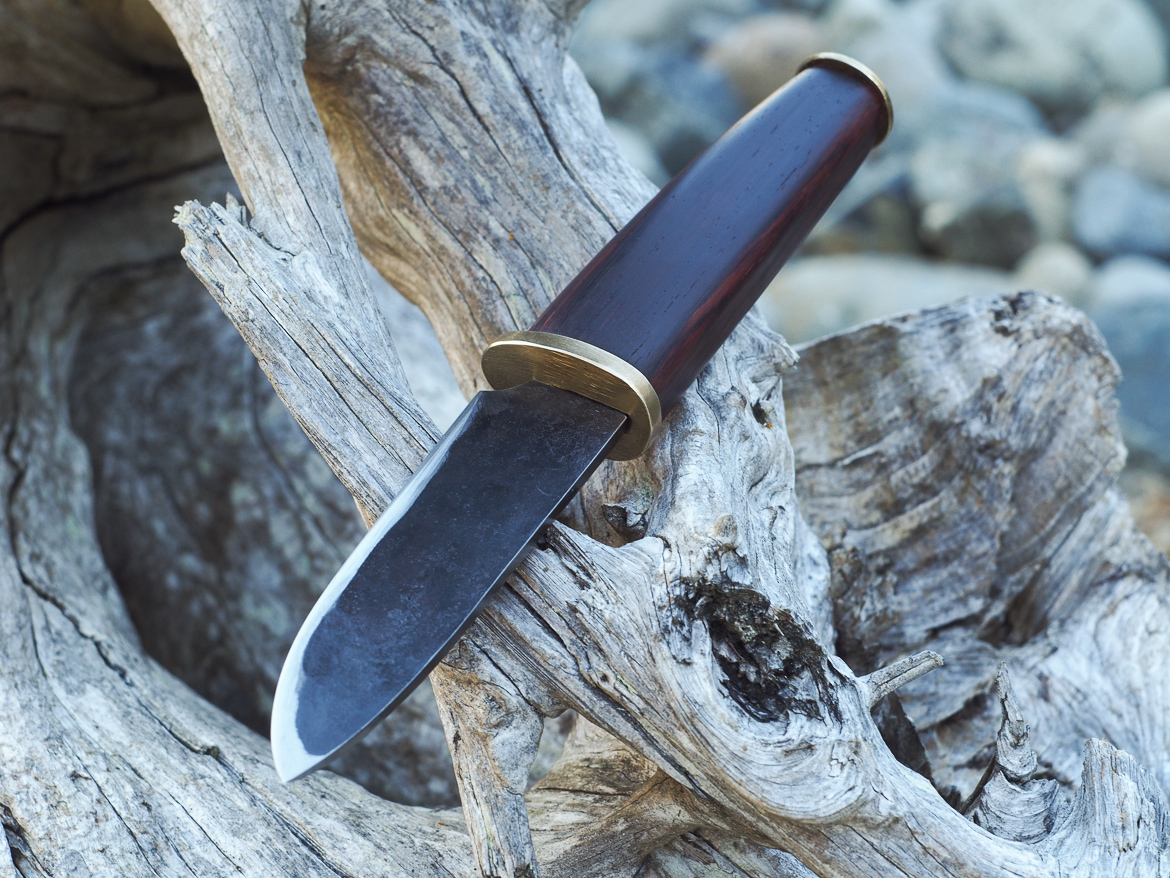
Cocobolo Drop Point
The raw material for this blade was a piece of a large mill saw blade, hand forged and clay tempered. The bronze guard began as a scrap from another island smith, cut off in the making of a large public sculpture in Victoria, and the wood is Cocobolo. A five yen coin from Japan (dated…
-

Antler Drop Point
This project began as an exploration of the traditional Scandinavian method of mounting a knife blade on a handle. The central element of the handle design is a slice of antler from which the wood handle and bronze guard flow organically. A different style and construction from my usual methods, this was an interesting challenge.…
-
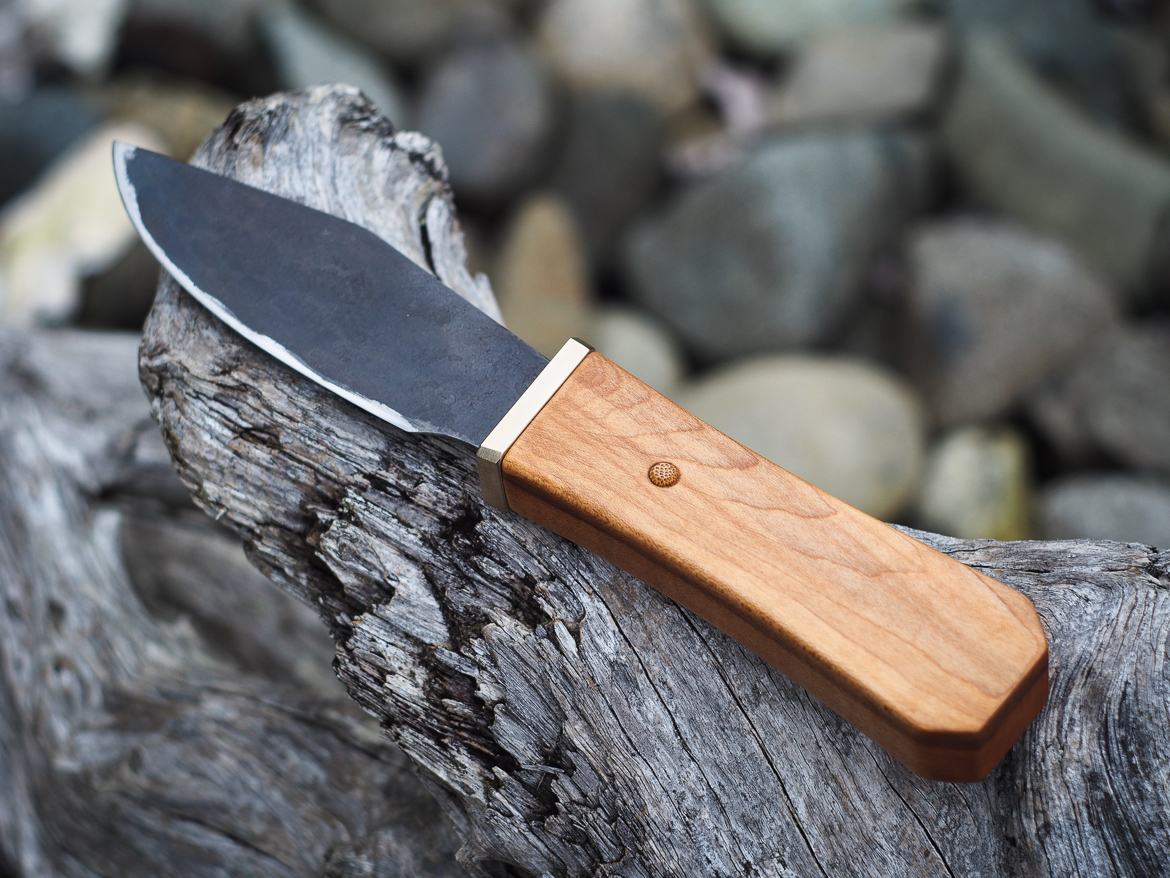
Maple Buffalo Skinner (Fusion Mount)
This clay tempered blade was hand forged from a sawmill blade. The natural texture from fire and hammer marks have been left on the surface of the blade. The shape draws inspiration from the lines of a classic clip point and the deep belly of a buffalo skinner. A fusion mount, the handle is constructed…
-

PKN16 Presentation: Before & After
See the finished Mikazuki Kotanto project: Mikazuki Kotanto
-

You Need A Japanese Swordsmith’s Hammer
Three reasons why *you* need a Japanese swordsmith’s hammer for forging knives. Size – the small face is better suited for working on a narrow target, keeping the hammer from hitting the anvil as the bevel gets thinner Weight – though the face is small, the long body carries the weight of a much larger…
-

Arbutus Camp Knife
This hefty camp knife is crafted in a traditional manner, hand forged from a Model T leaf spring, clay tempered, and finished with hand filing. The integral guard with finger grip allows the hand to shift forwards for more delicate work, or remain back for more aggressive cutting tasks. The convex edge can handle tough…
-
Letter Opener Collab
Scrap steel barstock shaped into a unique blade and accented with an embossed copper handle.
-

Desert Ironwood Skinner
This project began with a knife designed similarly to a classic Russell knife and included some modifications such as a deeper and more even belly curve, and a higher, thinner bevel, as specified by the client. The raw material was a section of a huge bandsaw blade, 12″ wide, double edged, that would have run…
-

Blacksmith’s Knives from Logging Steel and Rawhide
This type of integral design is based on a traditional companion knife made by blacksmiths in the previous century. The clay tempered blades were hand forged from a length of high carbon spring steel rod. The natural textures of the fire and hammer create the finished surfaces of the blade and handle. Material: Reclaimed logging…
-
Solid Wrought Spatula
A section of large wrought iron dock chain from Vancouver Island is hand forged in a single piece to create this kitchen tool.