
-

Brass Forest Kotanto
The core of this project is a high carbon blade, charcoal-forged from reclaimed steel, water quenched with clay and sharpened with waterstones, an outdoor knife that has the foundation of the Japanese sword but is finished in the simple and humble style of farming and foresting tools of centuries ago. Satoyama are the managed forest…
-

Mountain Kotanto with Antique Fittings
The core of this project is a charcoal-forged blade, water quenched with clay and sharpened with waterstones, an outdoor knife that has the foundation of the Japanese sword. The hamidashi mounting is in the rustic kura (蔵, storehouse) style and includes antique fittings from swords carried long ago. Satoyama are the managed forest areas that…
-

Koi-oshidori Field Kotanto
The core of this project is a charcoal-forged blade, water quenched with clay and sharpened with waterstones, an outdoor knife that has the foundation of the Japanese sword. The aikuchi mounting is in the rustic kura (蔵, storehouse) style and includes antique fittings from swords carried long ago. Satoyama are the managed forest areas that…
-

Sunnobi Mountain Tanto
Sunnobi tanto (寸延び短刀) are larger than ordinary tanto, with nagasa a sun or two above 1 shaku (sun nobi, “a sun longer”, from nobiru, to stretch or lengthen). Though there is some area of crossover with hira-zukuri ko-wakizashi and they may have sori similar to ko-wakizashi, the simplified difference would be that they are still…
-
Field Kotanto with Antique Fittings
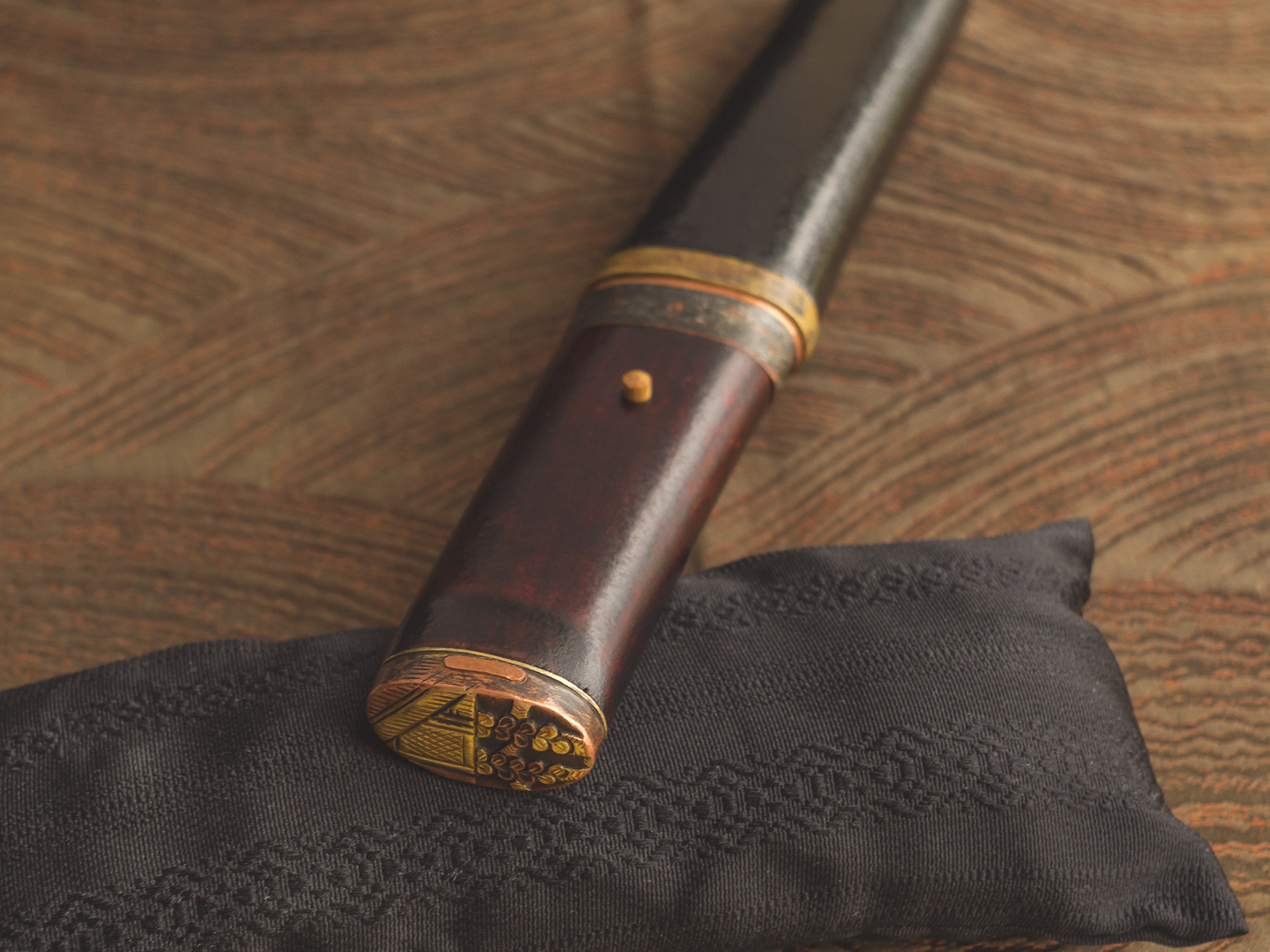
The core of this project is a charcoal-forged blade, water quenched with clay and sharpened with waterstones, an outdoor knife that has the foundation of the Japanese sword. The aikuchi mounting is in eclectic kura style and includes antique fittings made for swords centuries ago. Satoyama are the managed forest areas that border the cultivated…
-

SOTW #19 – Assembling the Inome Tanto
The inome (pronounced “ee-no-may”, 猪の目, eye of the boar) name comes from the pierced heart-shape designs of the decorative o-seppa on either side of the tsuba. This lovely motif is ubiquitous in Japan, seen often in architecture, furniture, and sword mountings. This is the first of my blades to incorporate antique sword parts as part…
-

温故知新・On Ko Chi Shin
A true and accurate understanding of the past is an important step towards a good future. 温故知新 (on ko chi shin) is an expression that most directly translates to, “study the old to know the new”. This one-of-a-kind project represents the current progression of my work based on the study and practice of historical techniques,…
-
Process: Making a Futokorogatana
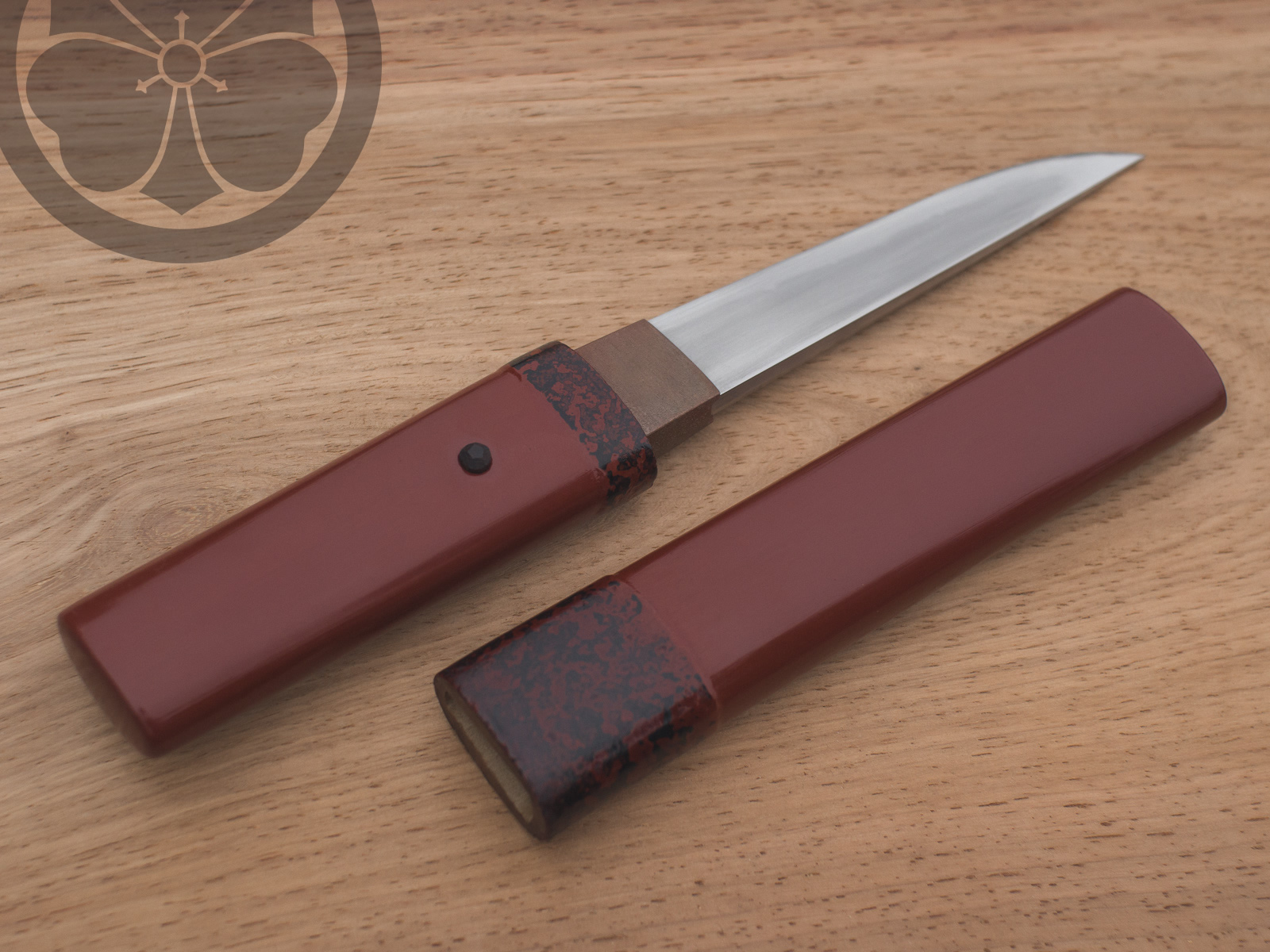
Futokorogatana (懐刀) is translated as “clothing fold sword” and describes a type of tanto mounting meant to be carried in the kimono sleeve or fold. Also known as kaiken, this humble style of hidden mounting is usually unadorned with a smooth profile and lacquer finish. This knife would historically be carried for last chance survival…
-
Pacific Yew Forest Kotanto
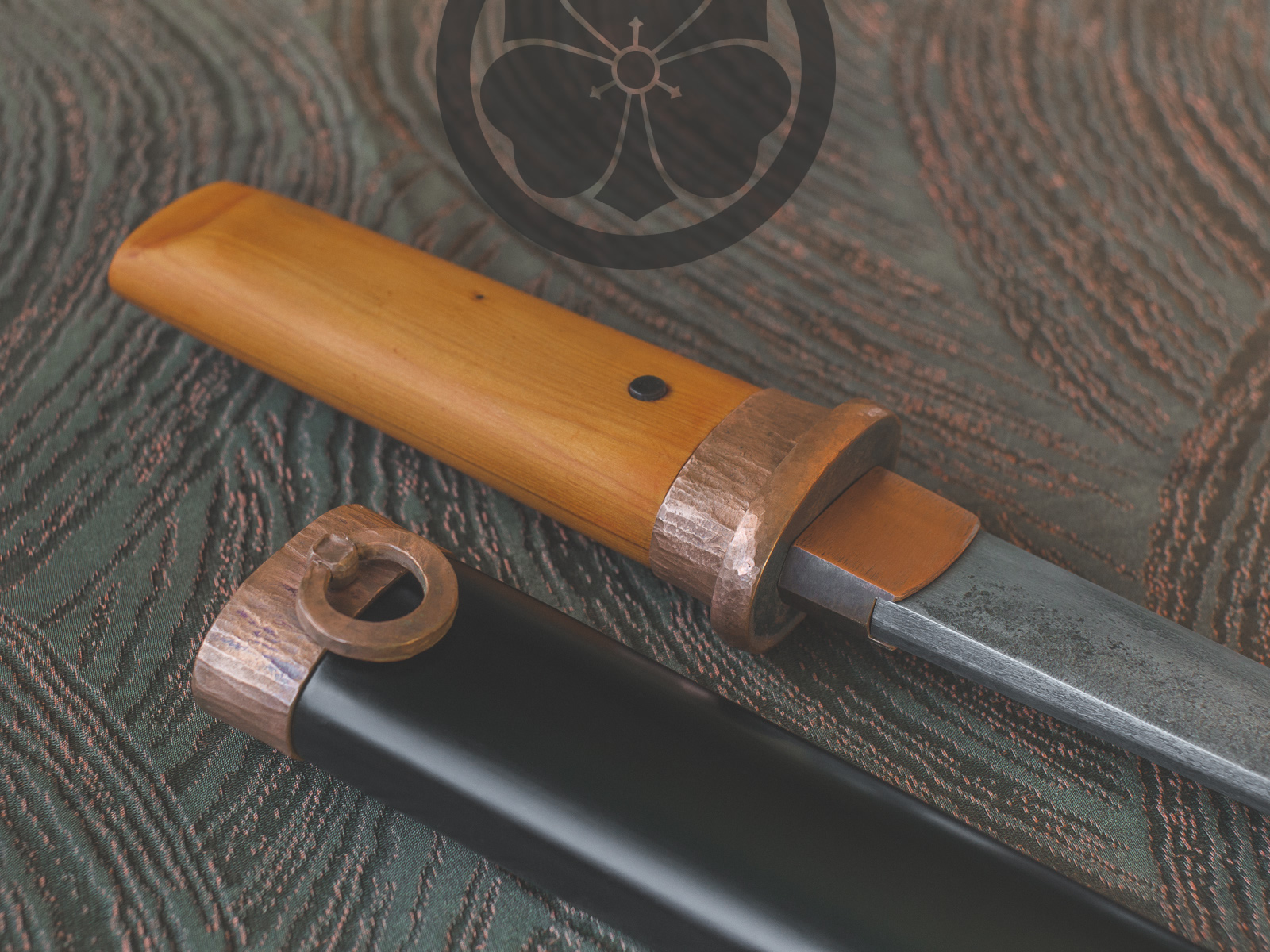
This custom kotanto finds a balance between the humble satoyama style and a classical tanto with a striking combination of forged copper, natural orange hardwood, and black urushi lacquer. The blade began as a reclaimed harrow tooth and was hand forged in a charcoal fire, differentially hardened using traditional water quench yaki-ire, and sharpened by…
-

Touzai Tanto
Touzai (東西) can be literally translated “East West” and carries the idea of spanning across distance or covering and including everywhere. There is also a saying, “kokontouzai” (古今東西) which means for all time and all places, literally “old, now, East, West”. This project began with the concept of ideas from different times and places coming…
-

Making a Hatchet Handle
The second half of the antique hatchet restoration project. There are several important points that are often overlooked when choosing or crafting an axe or hatchet handle. Though not a thorough treatise on the subject, this post will briefly discuss some axe and hatchet handle design theory and recommended dimensions, and provide an overview of…
-

Yozakura Tanto
The nightime viewing of cherry blossoms by moonlight is cherished for the unique perspective and focus it brings to the experience. The dark tones of the sky and the gentle light of the moon provide subtle variations in colour, texture, and detail that cannot be fully appreciated by day. This piece is reserved in its…
-

Kuromatsu Aikuchi Tanto
The Kuromatsu tanto with koshirae is named for a species of Black Pine (黒松) that grows near the seaside in Japan. The bark changes from grey to black as the tree matures and ages, symbolized by the colour and contrast of the smoother texture of the blade with the leathery texture of the darker scabbard.…
-

Antique Hatchet Restoration
When I have time, I enjoy restoring old tools back to a more useful and beautiful state. The most fuel, energy, and time intensive part of making an axe from scratch is punching or forge welding to form the eye. When quality antique axe and hatchet heads can be found in scrap piles or at…
-

Kuromon Aikuchi Tanto
Kuromon can be translated as “the black gate”. Designed around the concept of textural exploration as a companion project to Kuromatsu Aikuchi Tanto, this tanto with koshirae is a bold yet restrained piece that has the austere simplicity that appealed to the refined tastes of working samurai centuries before the Edo period. This tanto is…