
-

Process: Making the Mountain Kotanto
The wider profile of the mountain style kotanto is inspired by a kamakura sword and has a more deeply curved tip (fukura-tsuku) and shorter drop point. The simple and humble mounting style is inspired by the age-old style of farming and foresting tools traditionally used in managing satoyama lands. Satoyama are the managed forest areas…
-

SOTW #14 – Making the Mountain Kotanto
Tools for Satoyama project: Design your own knife.
-

Making a Mountain Tanto
The wider profile of the mountain style tanto is inspired by a kamakura sword and has a more deeply curved tip (fukura-tsuku) and shorter drop point. The simple and humble mounting style is inspired by the age-old style of farming and foresting tools traditionally used in managing satoyama lands. Satoyama are the managed forest areas…
-

Tools for Satoyama
Satoyama are the managed forest areas that border the cultivated fields and the mountain wilds in Japan. Historically they provided fertilizer, firewood, edible plants, mushrooms, fish, and game, and supported local industries such as farming, construction, and charcoal making. Balancing the interaction of wetlands, streams, forests, and fields is an important component of the satoyama…
-

Making a Tanto Style Takedown Handle
The tang and handle of a classical tanto are constructed in a manner that requires only a single bamboo peg to hold the entire knife assembly together. In addition to the sense of beautiful simplicity, this design allows the knife to be taken apart for cleaning, polishing, or sharpening work. Carving and fitting the inside…
-
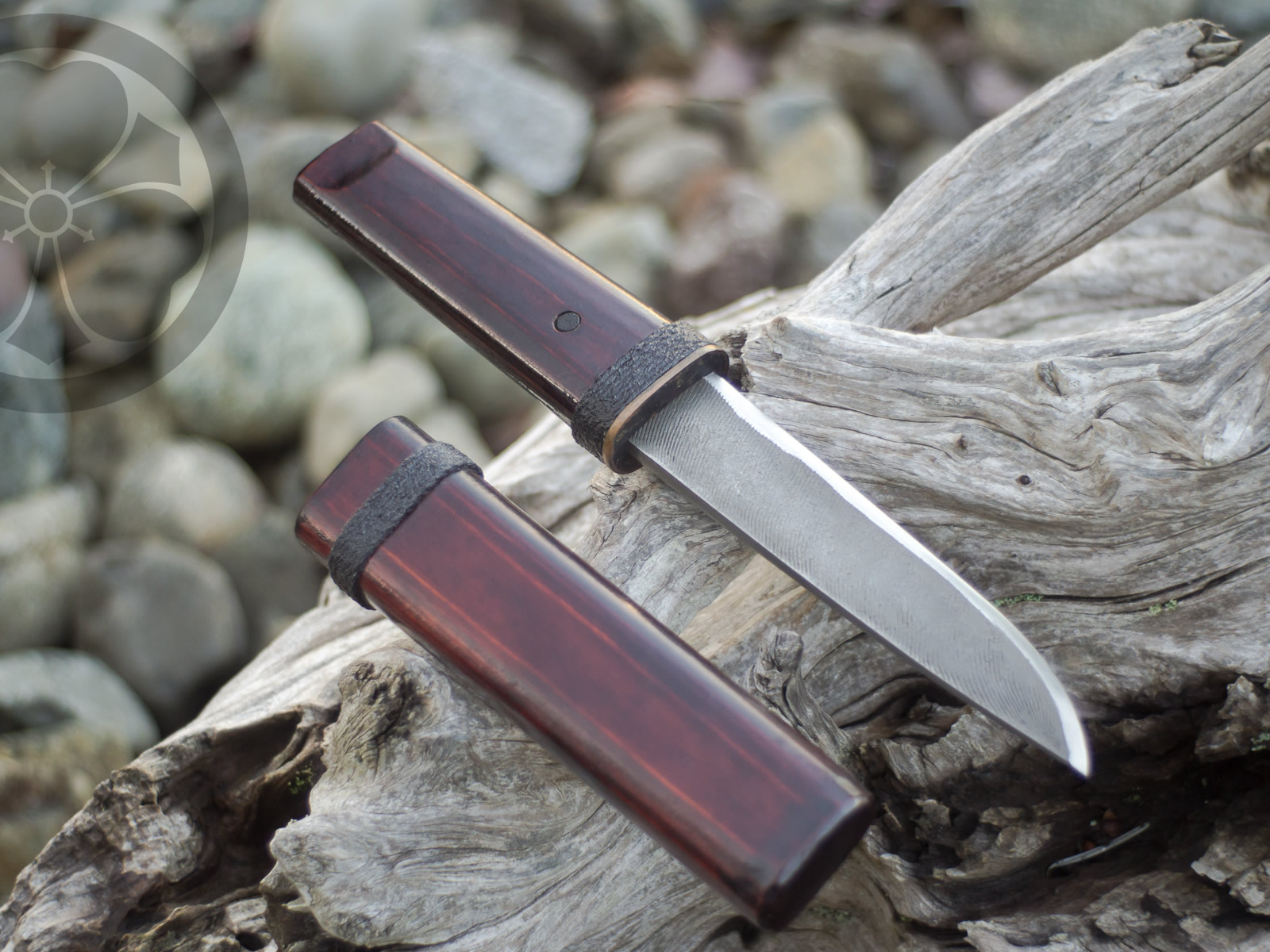
Forest Kotanto
A clay tempered blade hand forged in a charcoal fire, water quenched with clay, sharpened with waterstones, and finished simply and humbly in the age-old style of farming and foresting tools traditionally used in managing satoyama lands. Satoyama are the managed forest areas that border the cultivated fields and the mountain wilds in Japan. Historically…
-

Mountain Kotanto
A clay tempered blade hand forged in a charcoal fire, water quenched with clay, sharpened with waterstones, and finished simply and humbly in the age-old style of farming and foresting tools traditionally used in managing satoyama lands. Satoyama are the managed forest areas that border the cultivated fields and the mountain wilds in Japan. Historically…
-
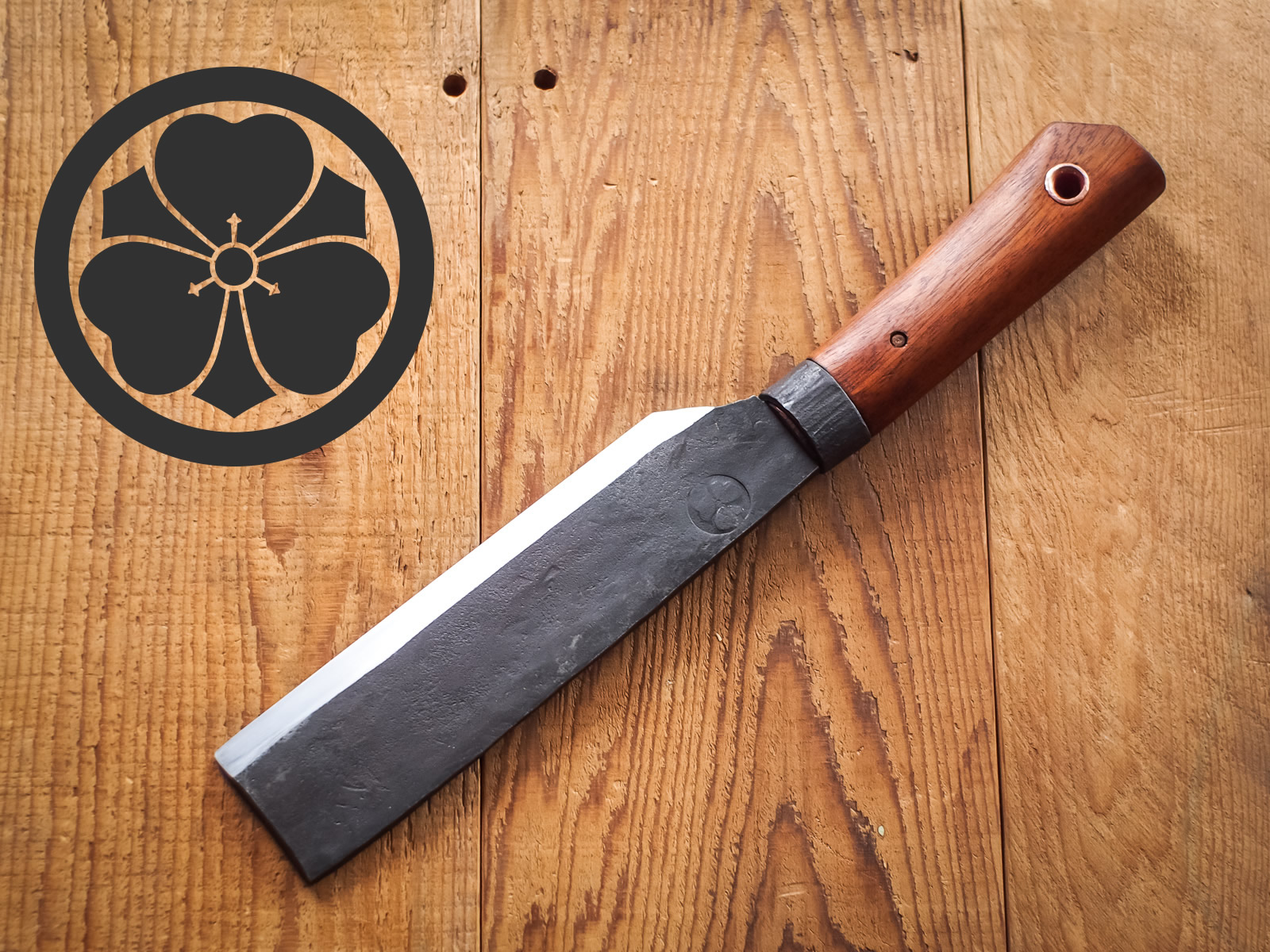
Case Study: Making a Hon-Yaki Nata
Nata (屶, directly translated “mountain sword”, or 鉈) come in various sizes and shapes, but the type most familiar in the west does the duty of a light brush hatchet or heavy camp knife. Common characteristics include thick spines and heavy blades, often with single beveled edges similar to Japanese wood chisels. This type work…
-

Sounds of the Workshop: Finishing a Hon-Yaki Nata
Read more about the process of making a nata here: islandblacksmith.ca/2015/06/making-a-hon-yaki-nata/
-
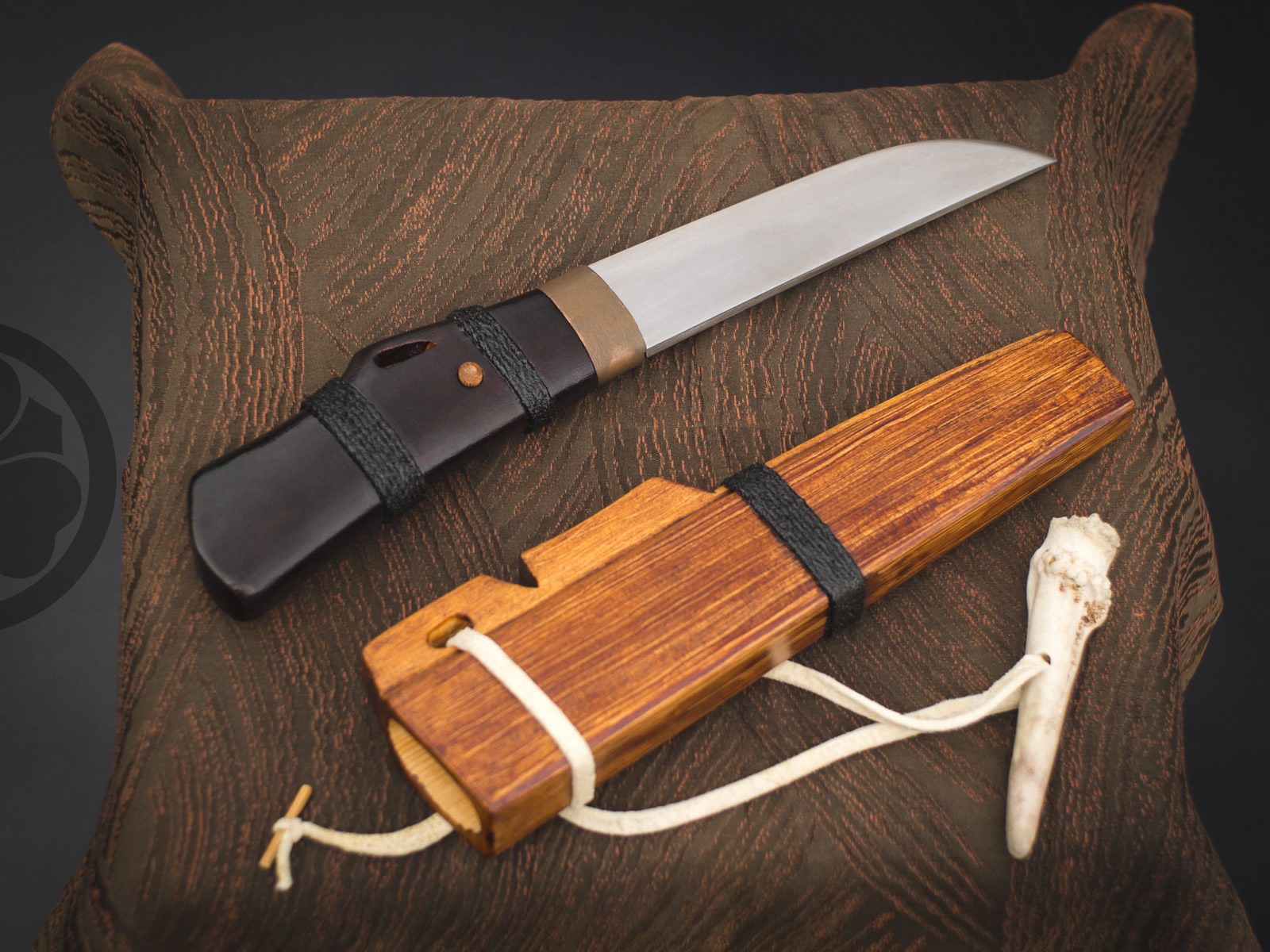
Makiri Style Kotanto
The makiri is one of the traditional knife patterns of the Ainu, an indigenous people of Japan. Makiri are generally mid-sized utility knives and are hung from a belt by a lanyard. They are mounted with wooden handles and scabbards and may be decorated with carvings or incisions, often added by the owner. The most…
-
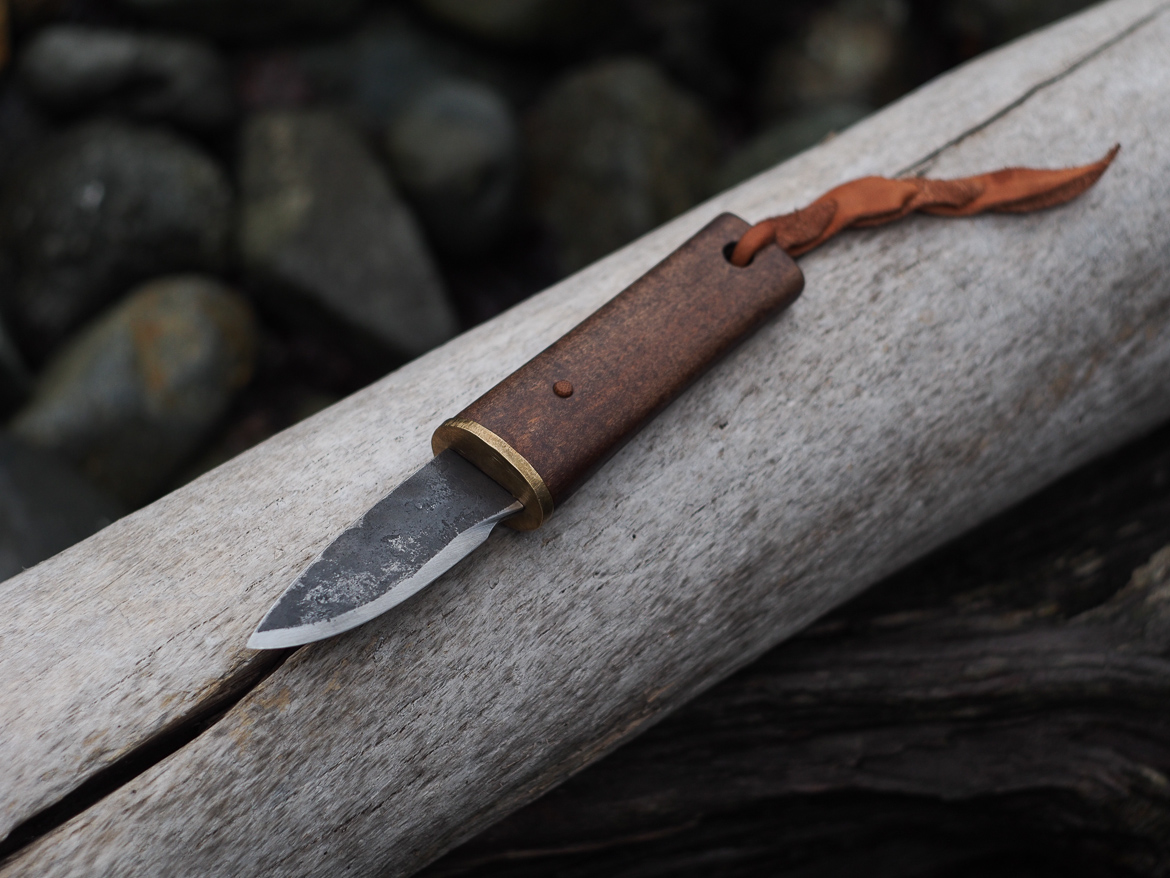
Bullfrog Stream Kotanto
A compact and functional utility bushcraft knife, this clay tempered blade was hand forged from a stone cutting diamond saw blade. Natural texture from fire and hammer marks has been left on the surface of the blade. This piece is one of the first of a series combining the style and size of outdoor knives…
-
Antique Japanese Farming Tools
Interesting tools used to manage a rice field and a mountain forest in the Japanese countryside. I have the privilege of being able to help out from time to time on the family farm. When we are in town, I enjoy hunting through the workshop and barn to see what old tools can be found…
-
Sharpening a Nata (variation of a Japanese brush knife)
-
Sharpening a Kama (Japanese farmer’s sickle)
-
Making a handle for a small pick