
-
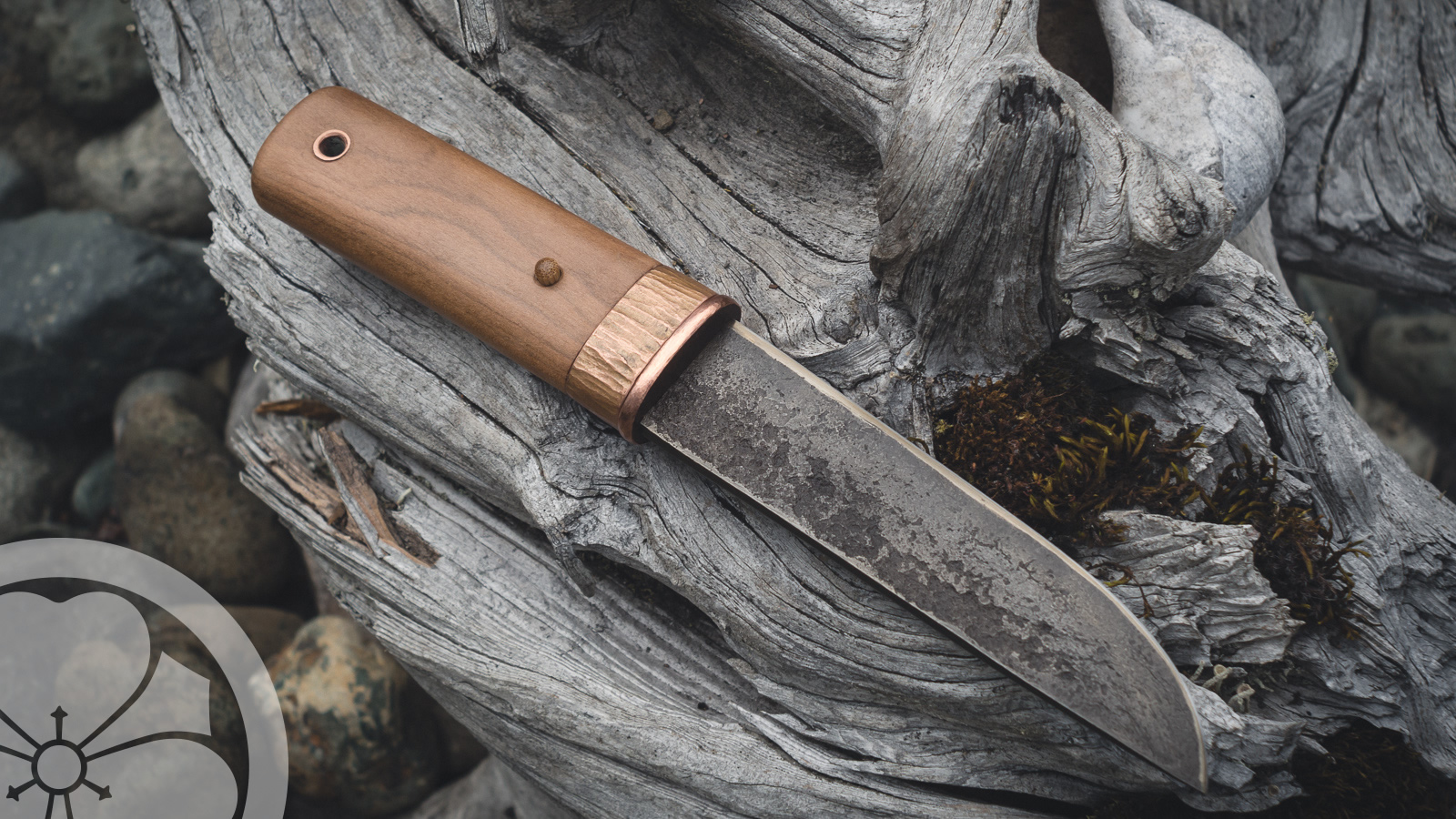
Pear Mountain Kotanto
This knife was forged from a piece of very special old steel and has been paired with part of a seventy year old pear tree and an existing leather sheath. The custom leather sheath was part of an estate sale and was hand crafted on Vancouver Island. Satoyama are the managed forest areas that border…
-

Brass Mountain Kotanto
The core of this project is a high carbon blade, charcoal-forged from reclaimed steel, water quenched with clay and sharpened with waterstones, an outdoor knife that has the foundation of the Japanese sword but is finished in the simple and humble style of farming and foresting tools of centuries ago. Satoyama are the managed forest…
-
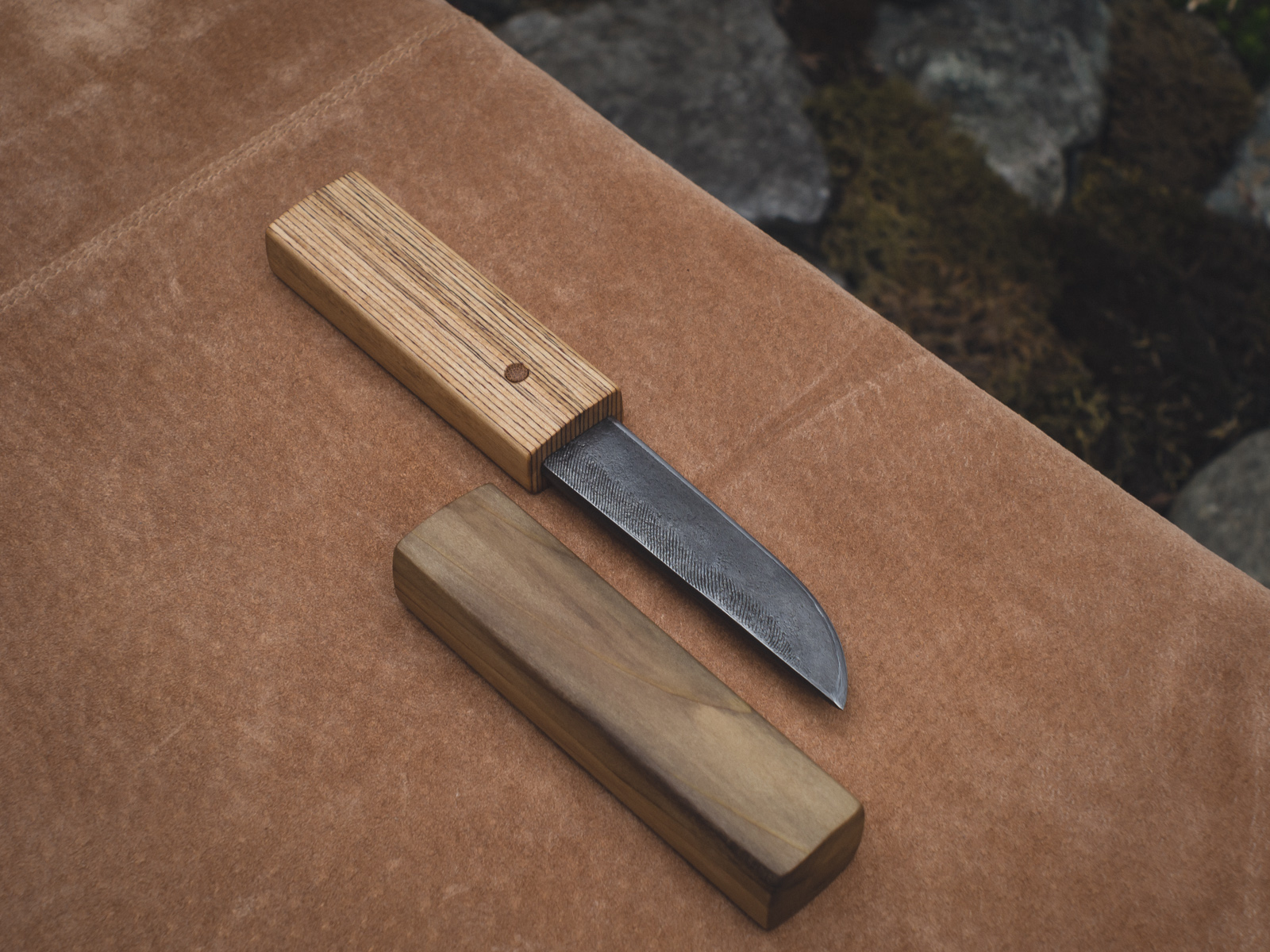
Stream Kotanto with Laminated Handle
The core of this project is a charcoal-forged blade, water quenched with clay and sharpened with waterstones, an small knife that has the foundation of the Japanese sword but is finished in the simple and humble style of farming and foresting tools of centuries ago. Satoyama are the managed forest areas that border the cultivated…
-
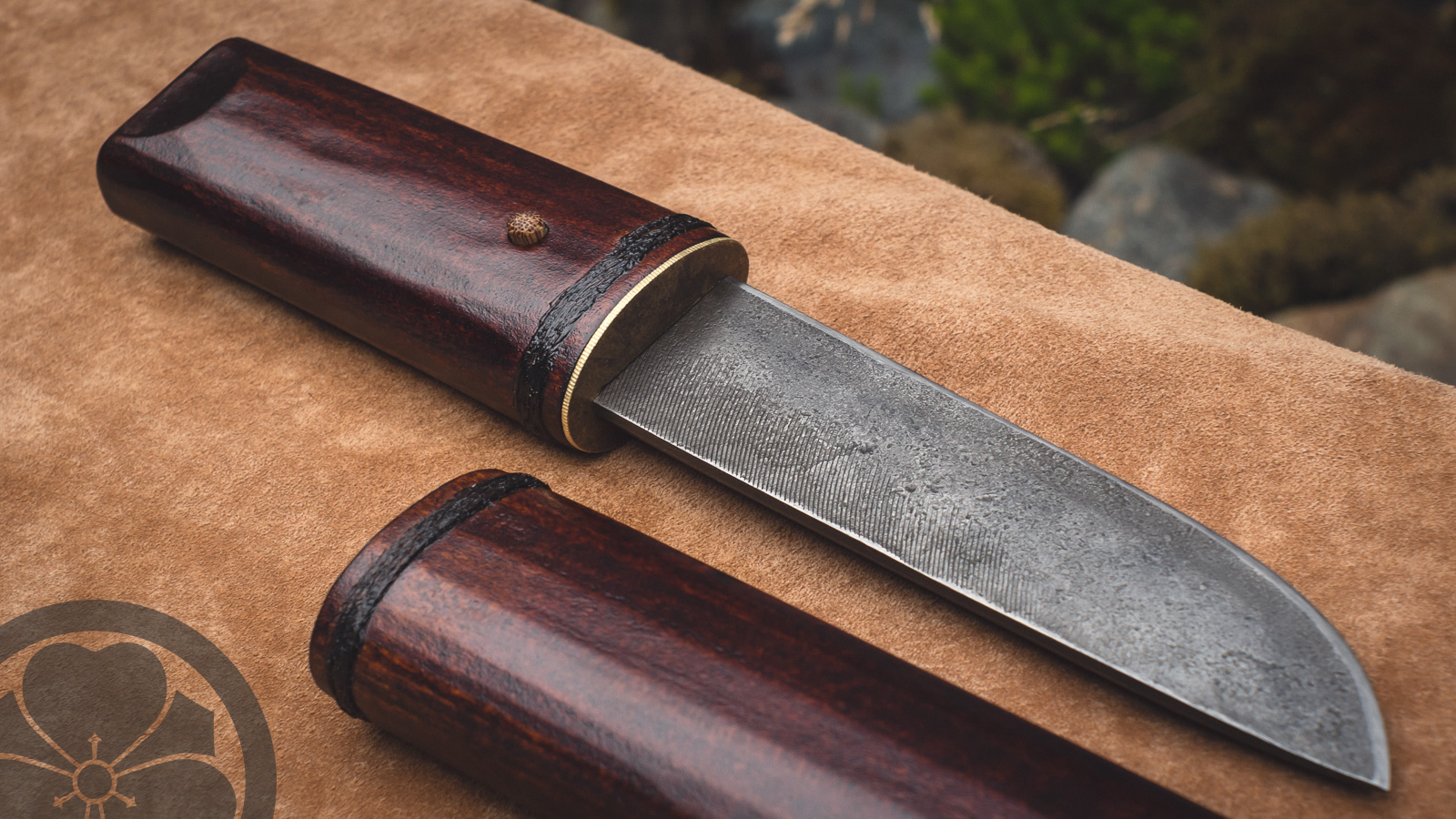
Kominka Mountain Kotanto
The core of this project is a charcoal-forged blade, water quenched with clay and sharpened with waterstones, an outdoor knife that has the foundation of the Japanese sword but is finished in the simple and humble style of farming and foresting tools of centuries ago. Satoyama are the managed forest areas that border the cultivated…
-

Sapele Satoyama Survival
An interesting challenge to forge a knife to fit an existing sheath. The leather sheath was part of an estate sale and was hand crafted by a custom knifemaker. With some careful planning and accurate forging it can once again serve a useful purpose. This knife should probably be considered the first official satoyama bowie,…
-

Brass Forest Kotanto
The core of this project is a high carbon blade, charcoal-forged from reclaimed steel, water quenched with clay and sharpened with waterstones, an outdoor knife that has the foundation of the Japanese sword but is finished in the simple and humble style of farming and foresting tools of centuries ago. Satoyama are the managed forest…
-

Process – Forging a Sunnobi Forest Tanto
This blade was forged and underwent yaki-ire at the museum forge. It began as a pre-1960s (integral) cultivator tine used by a farmer a generation or more ago. It is a sunnobi (overlength) tanto in the forest pattern, charcoal-forged and water quenched with clay, a satoyama style outdoor knife that has the foundation of the…
-
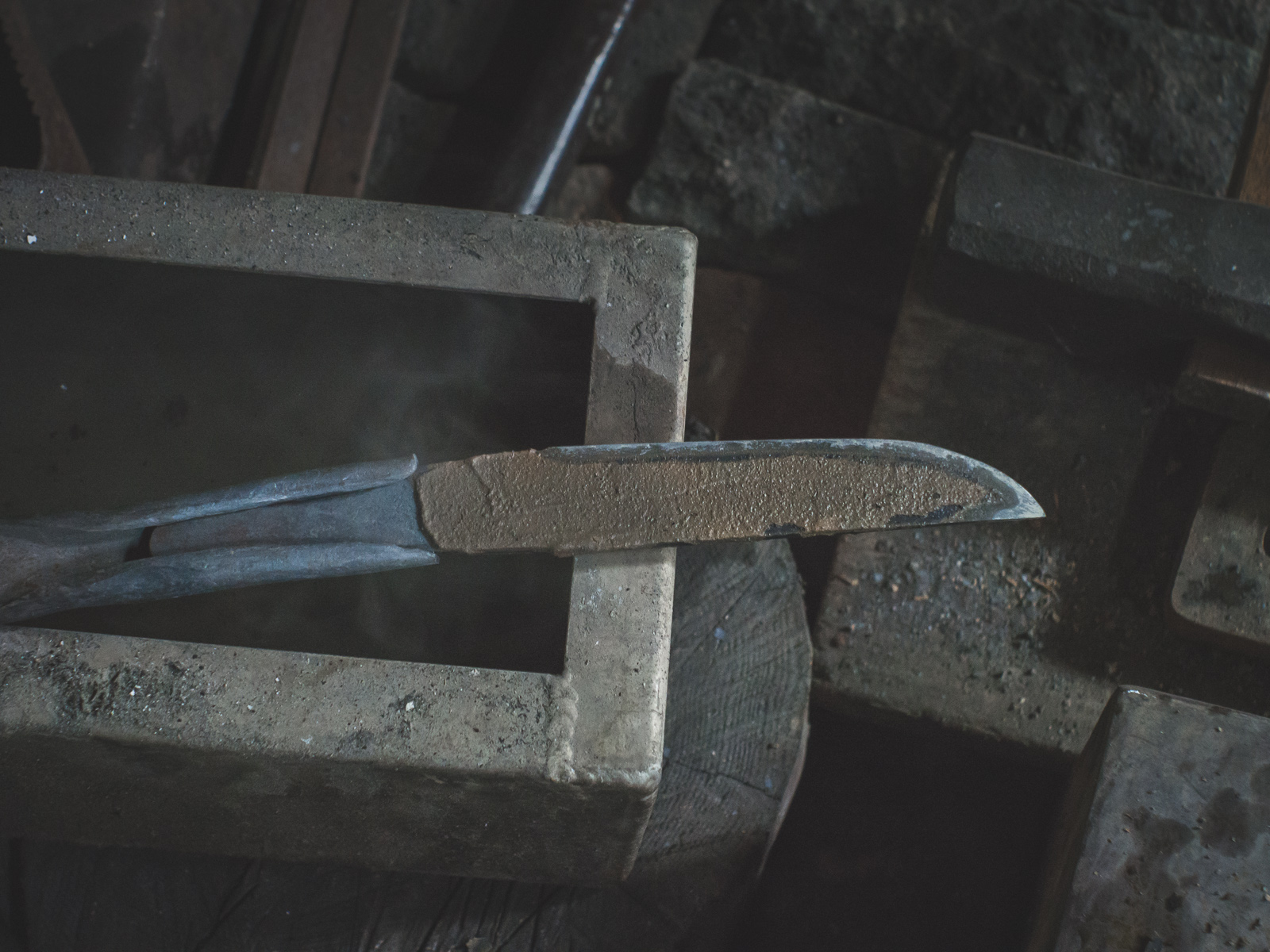
Process – Forging a Mountain Kotanto
This blade was forged and underwent yaki-ire at the museum forge. It began as a pre-1960s (integral) cultivator tine used by a farmer a generation or more ago. It is a kotanto in the mountain pattern, charcoal-forged and water quenched with clay, a satoyama style outdoor knife that has the foundation of the Japanese sword.…
-

Kominka Field Kotanto
This project was a unique opportunity to work with legacy materials to craft a useful tool that is already an heirloom. A charcoal-forged blade, water quenched with clay and sharpened with waterstones, an outdoor knife that has the foundation of the Japanese sword, finished in the simple and humble style of farming and foresting tools…
-

Yoroidoshi Forest Kotanto
The core of this project is a charcoal-forged blade, water quenched with clay and sharpened with waterstones, an outdoor style knife that has the foundation of the Japanese sword. The hamidashi mounting is in the rustic kura style and includes antique fittings from swords carried generations ago. Satoyama are the managed forest areas that border…
-

Mountain Kotanto with Antique Fittings
The core of this project is a charcoal-forged blade, water quenched with clay and sharpened with waterstones, an outdoor knife that has the foundation of the Japanese sword. The hamidashi mounting is in the rustic kura (蔵, storehouse) style and includes antique fittings from swords carried long ago. Satoyama are the managed forest areas that…
-

Itten Forest Tanto
Itten (一転, “eat..ten”) means a turning point or turn of events, as in a story or set of circumstances. It carries the idea of a sudden or unexpected shift, return, or change, and often means a complete turn around, in skateboard terminology this is known as a one-eighty (180°). This is the first hammer-finished full…
-

Koi-oshidori Field Kotanto
The core of this project is a charcoal-forged blade, water quenched with clay and sharpened with waterstones, an outdoor knife that has the foundation of the Japanese sword. The aikuchi mounting is in the rustic kura (蔵, storehouse) style and includes antique fittings from swords carried long ago. Satoyama are the managed forest areas that…
-
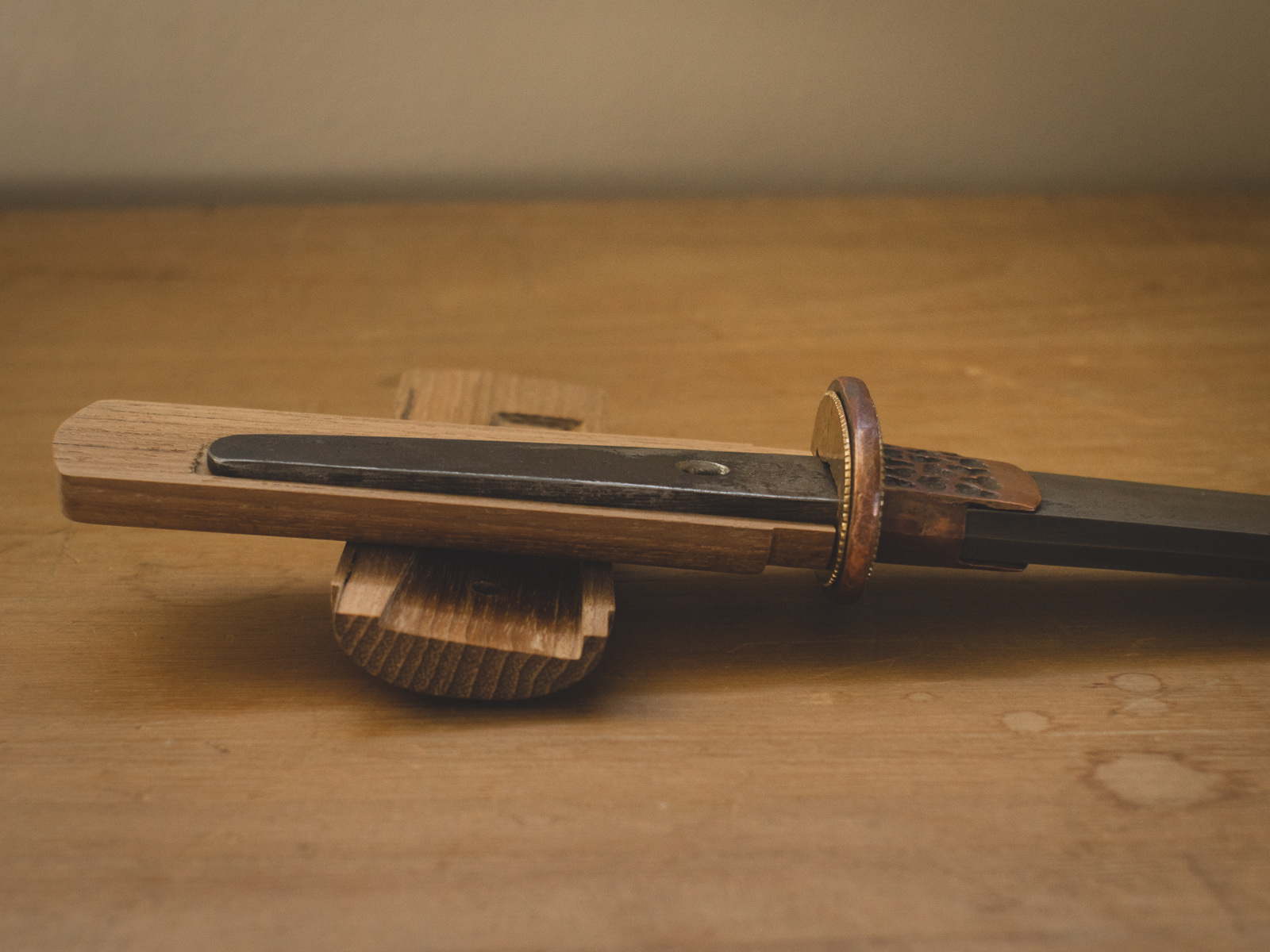
An Inside Look at Handle Geometry
A rare opportunity to compare the inside and outside geometry of a finished handle core. Historically an old tsuka would be split open for repair or adjustment or even re-purposing for a new blade, however a newly crafted tsuka is always glued together before the outside is shaped. In this unusual case the core was…
-

Sunnobi Mountain Tanto
Sunnobi tanto (寸延び短刀) are larger than ordinary tanto, with nagasa a sun or two above 1 shaku (sun nobi, “a sun longer”, from nobiru, to stretch or lengthen). Though there is some area of crossover with hira-zukuri ko-wakizashi and they may have sori similar to ko-wakizashi, the simplified difference would be that they are still…