
-

Bladesmithing at the Museum Forge
Forging a custom forest kotanto in the swordsmith forge. The starting material was a harrow tooth, the finished blade is hirazukuri, mitsu mune, 140mm / 5.5″ nagasa, with a sturdy 6.5mm motokasane. The finish will be tsuchime (hammer texture) so there was no filing or polishing before yaki-ire, which was done at my forge for…
-
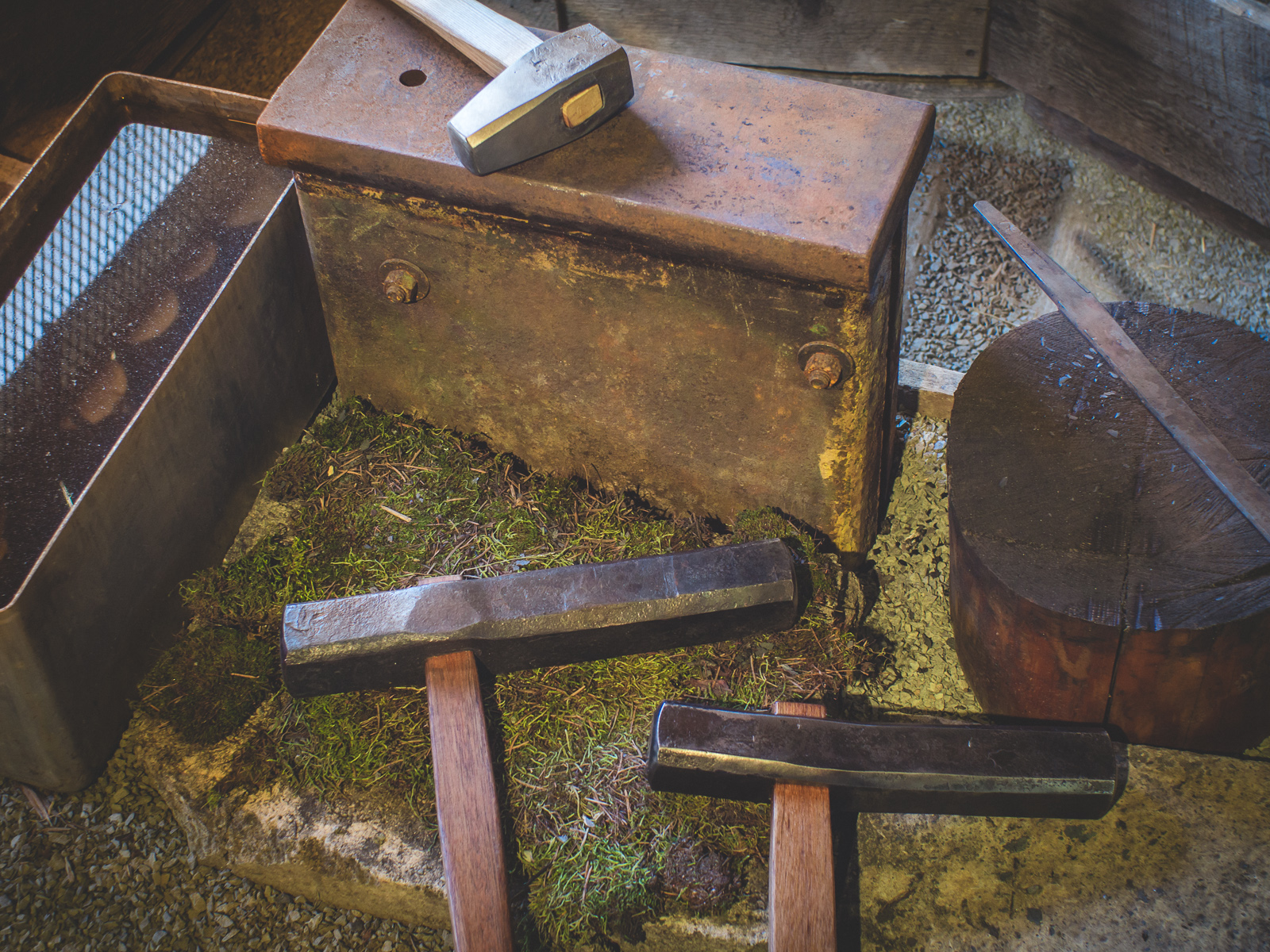
Making a Handle for a Japanese Swordsmithing Hammer
Traditional Japanese swordsmithing hammers have rectangular eyes with no taper. The handles are not wedged but are held in place by a compression fit involving careful shaping, hand forged wood (kigoroshi, 木殺し), and soaking in water. The wood is shaped a mm or two oversized, compressed by hammering, and then driven through the eye. When…
-

Making a Swordsmith Anvil from Scrap
A Japanese swordsmith style anvil made from junkyard scrap. The two side pieces are cast steel or iron John Deere 8255C rear counterweights from a shovel dozer. They weigh about 200-240lbs each and measure about 2 1/8″ x 14 3/4″ x 25″. There is a ‘T’ shaped face and stem that extends to the ground…
-

Testing Scrap Steel for Knife Making
Most of history was forged with steel that had no designated number or specified ingredient list. Historical smiths would interpret the quality and properties of steel based solely on careful observation and simple testing procedures. To this day, Japanese swordsmiths work exclusively with unnumbered steel made with charcoal and iron sand in traditional smelting furnaces.…
-

TimeWarp #9 – Making a Mountain Kotanto
Read about the process of making this knife, learn about the Tools for Satoyama project, or design your own knife.
-

Process: Making the Mountain Kotanto
The wider profile of the mountain style kotanto is inspired by a kamakura sword and has a more deeply curved tip (fukura-tsuku) and shorter drop point. The simple and humble mounting style is inspired by the age-old style of farming and foresting tools traditionally used in managing satoyama lands. Satoyama are the managed forest areas…
-
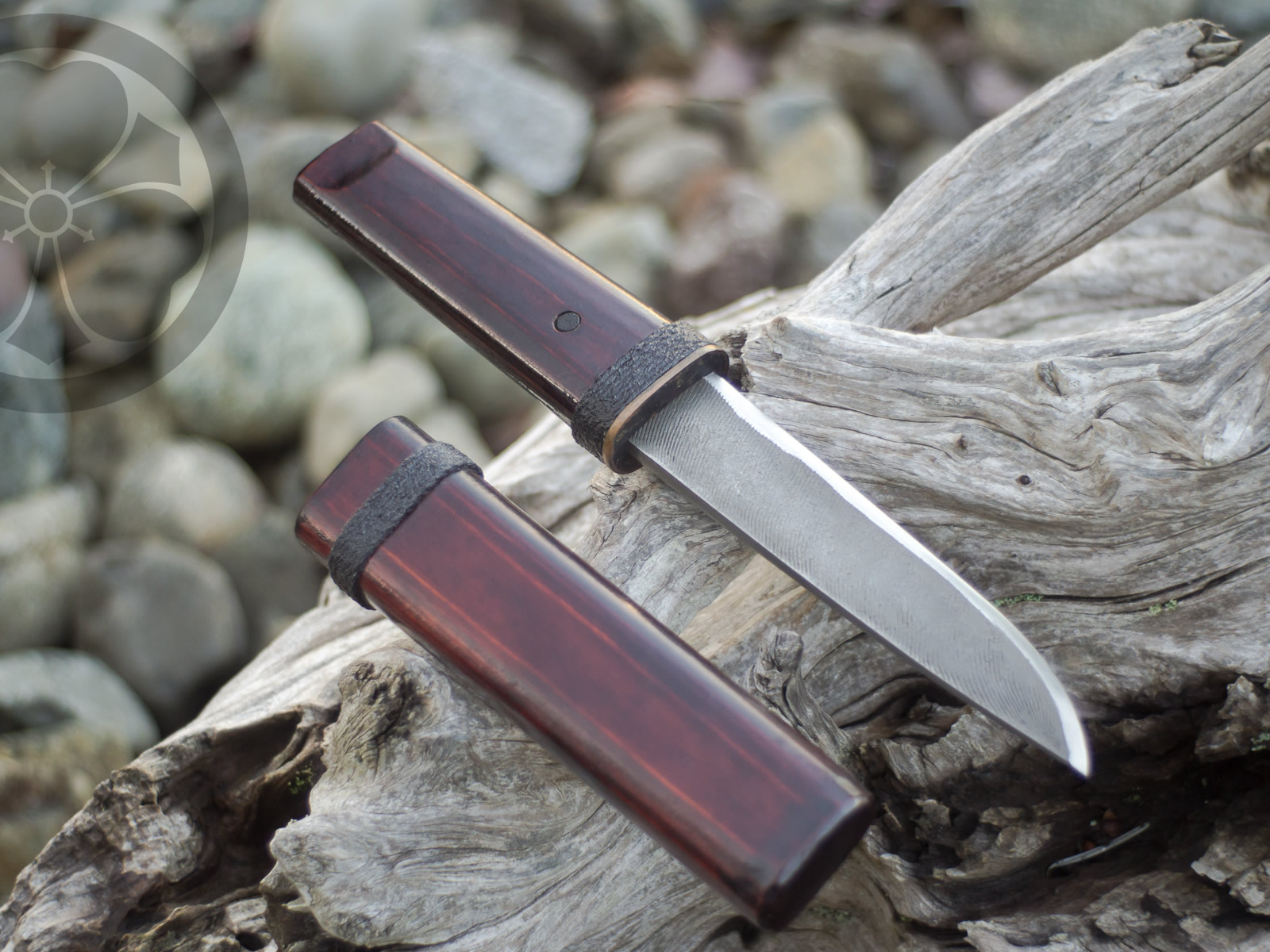
Forest Kotanto
A clay tempered blade hand forged in a charcoal fire, water quenched with clay, sharpened with waterstones, and finished simply and humbly in the age-old style of farming and foresting tools traditionally used in managing satoyama lands. Satoyama are the managed forest areas that border the cultivated fields and the mountain wilds in Japan. Historically…
-

Mountain Kotanto
A clay tempered blade hand forged in a charcoal fire, water quenched with clay, sharpened with waterstones, and finished simply and humbly in the age-old style of farming and foresting tools traditionally used in managing satoyama lands. Satoyama are the managed forest areas that border the cultivated fields and the mountain wilds in Japan. Historically…
-
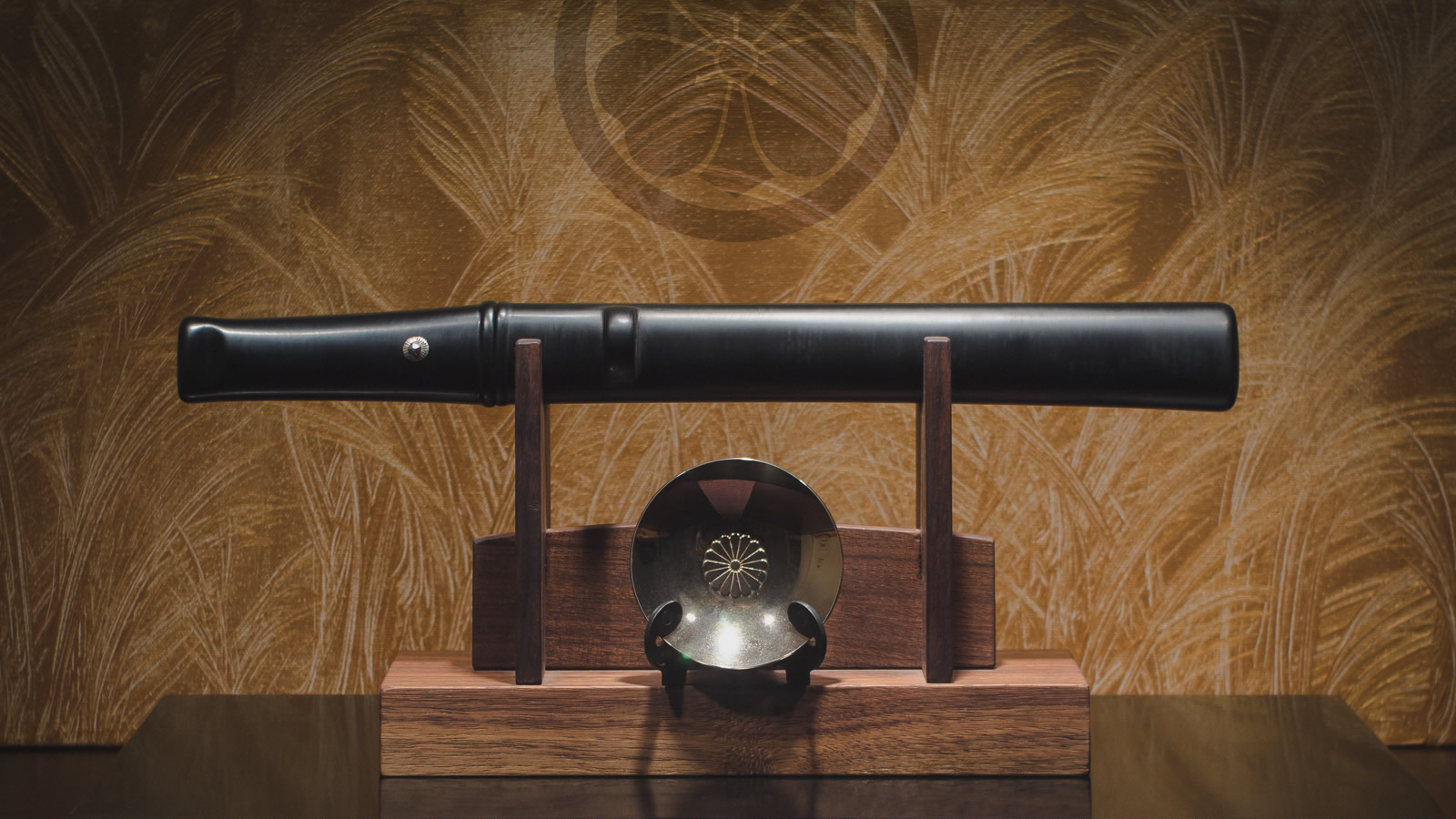
Sounds of the Workshop: Tanto Overview
The tools are simple and few, but the work is long and hard. A collection of clips documenting the steps and sounds involved at many stages of the process of crafting charcoal forged classical tanto and mountings from reclaimed materials. Footage from several recent projects is included, some extended and some previously unreleased, some from…
-

Touzai Tanto
Touzai (東西) can be literally translated “East West” and carries the idea of spanning across distance or covering and including everywhere. There is also a saying, “kokontouzai” (古今東西) which means for all time and all places, literally “old, now, East, West”. This project began with the concept of ideas from different times and places coming…
-

Making Sekigane for a Wrought Iron Tsuba
Guards for classical Japanese style takedown knives are generally formed as variations of flat discs that slide over the tang. When working with wrought iron or steel, small copper inserts called sekigane (責金) are often used to prevent contact between the blade and the tsuba. This photo essay will attempt to portray a simple approach…
-

From the Garden to the Forest
A pair of outdoor knives forged from a single reclaimed hedge shear blade and finished simply and humbly in the age-old style of farming and foresting tools traditionally used in managing satoyama lands. Satoyama are the managed forest areas that border the cultivated fields and the mountain wilds in Japan. Historically they provided fertilizer, firewood,…
-

The Bone Knife
This project is part of the artifact series which tend to have the appearance of far older variations of my fusion style works and seem to come from an alternative history where cultures might have blended at different times and in different ways. This particular work is more of a departure from my usual designs,…
-

Making an Outdoor Knife
The Japanese swordsmithing tradition has been in place for generations and many of the design elements have been tested and refined for centuries. With careful study and practice, this can be a solid foundation for today’s bladesmiths and knifemakers to build their work upon. This article will provide an overview of the process and cover…
-

Making a Hatchet Handle
The second half of the antique hatchet restoration project. There are several important points that are often overlooked when choosing or crafting an axe or hatchet handle. Though not a thorough treatise on the subject, this post will briefly discuss some axe and hatchet handle design theory and recommended dimensions, and provide an overview of…