
-

Tsukimi Tanto
The bright orange moon of late Summer and early Autumn is the inspiration for this work. Tsukimi means moon watching, and brings to mind a lovely harvest moon and the rustling sounds of the dry, frost coloured susuki grass as the evening breeze blows across the plateau. The unusual ring and plate style kurikata is…
-
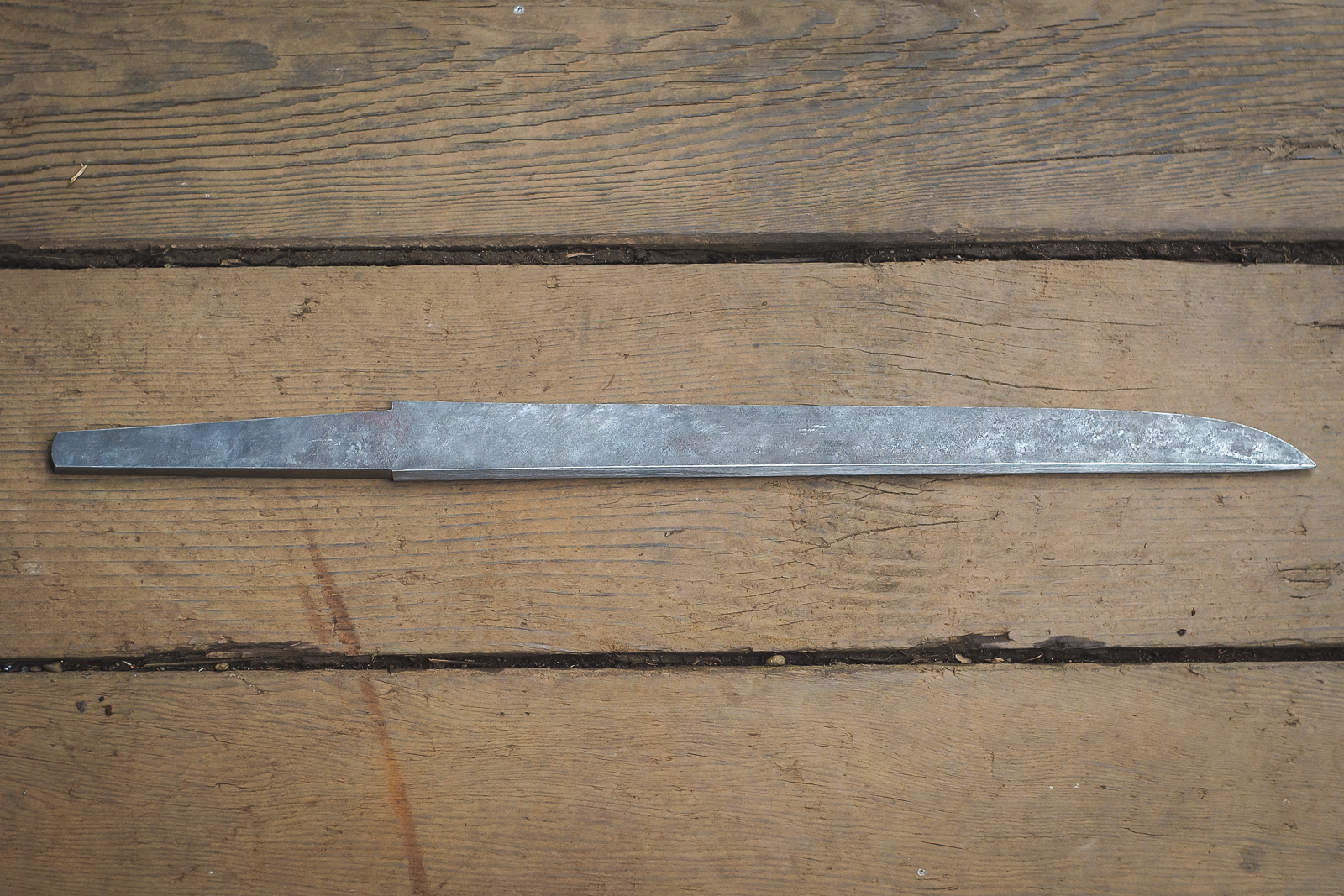
Forging the Ashinoho Tanto
This tanto began as a reclaimed carriage spring and was hand forged in a pine charcoal fire, smoothed with files and a sen scraper, differentially hardened using traditional water quench yaki-ire with clay, and polished by hand with natural Japanese water stones. This tanto was forged from an antique horse-drawn carriage spring in early 2014,…
-
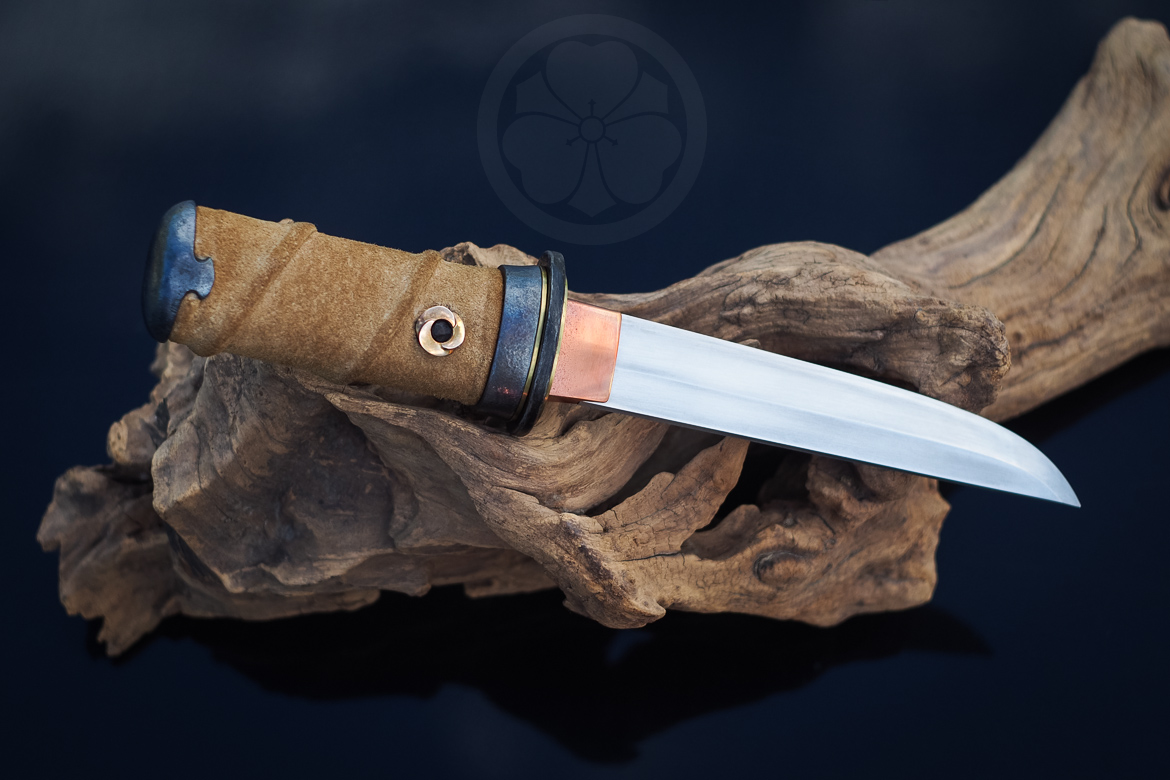
Uzumaki Kotanto
Uzumaki means a spiral or whirlpool shape and refers to both the triple wave whirlpool shape of the bronze accent around the mekugi and the spiraling wrap of the gangi-maki handle. It also alludes to the cyclical nature of the history and journey of usefulness of the many materials reclaimed for its creation. This tanto…
-
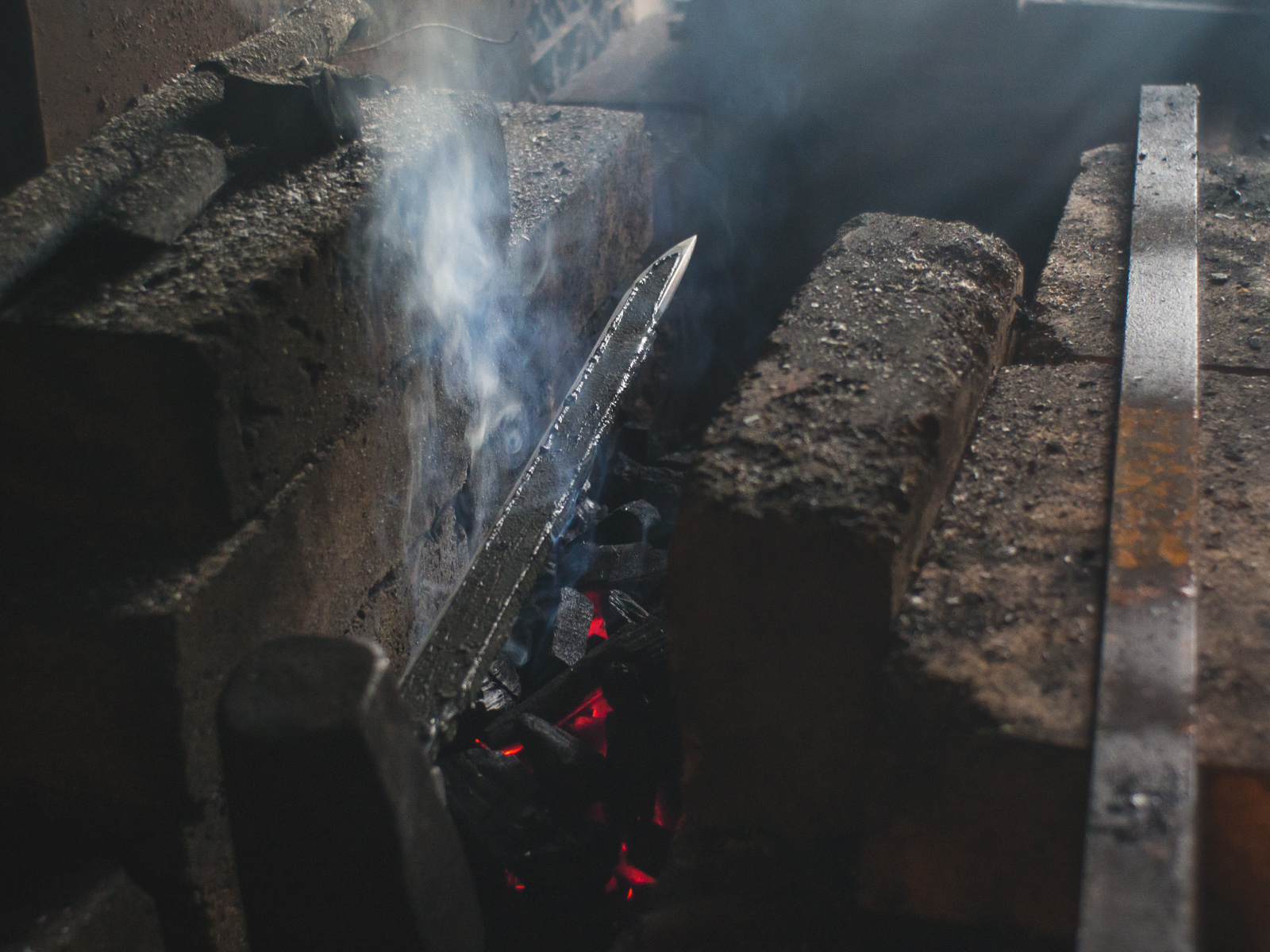
Yaki-Ire – How a Tanto Blade is Born
Until it survives the hardening process, a tanto is only a piece of steel, not yet a blade…read more about this transformational stage: Yaki-Ire (Clay Tempering)
-

Classical Tanto Geometry: Blade & Kissaki
The geometry of a tanto blade is simpler to describe than the tang, though it has more subtleties and nuances. The three main characteristics I want to focus on are tip shape, spine thickness, and bevel geometry. While kata document the profile of a blade, they leave much to be desired in terms of creating…
-

Classical Tanto Geometry: Nakago & Machi
The geometry of the nakago (tang) is very important as the assembly of the knife hinges on the correct form and construction of the tang. Viewed from the spine, the thickest part of the blade is at the machi (notches) and there is a distal taper towards the tip of the blade and towards the…
-

Forging a Tanto from a Carriage Leaf Spring
Full Length Version **The heating time has been edited out and some of the tang work is missing due to battery issues. The blade shape is based on the Aizu Shintogo kata: islandblacksmith.ca/2014/04/aizu-shintogo-kunimitsu-tanto-kata/ Making the most of the fire, hammer, and anvil to prepare the steel to be refined and smoothed…read more about this foundational…
-

On Forging, Temperature, & Grain Size
In a sentence, thermal cycling, or normalizing, is the metallurgical technique of reducing visible grain size by repeated cycling of steel from near its critical temperature to ambient temperature. Several years ago I wondered how traditional Japanese smiths were able to produce such fine grain size even in cases when normalizing was not officially part…
-

Sunahama Kotanto
This piece was named for the way the natural spalting design of the saya is reminiscent of an ink painting of waves washing on a sand covered shoreline. It also commemorates the fact that the woods used for the handle and saya are among the most recognizable of the West Coast woods, and the common…
-

Case Study: Making the Sunahama Kotanto
scroll down or jump to the sections below: Blade Sunobe Hizukuri Ara-shiage Hardening Clay Mixture Tsuchioki Yaki-ire Polishing Kaji Togi Shitaji Togi Habaki Forging Filing Bending Soldering Handle Seppa Nakago-ana Sokui Core Tsuka Tsukamaki Mekugi Scabbard Inside Outside Assembly Forging a Kotanto Blade A charcoal fire is used to heat the steel for shaping with…
-
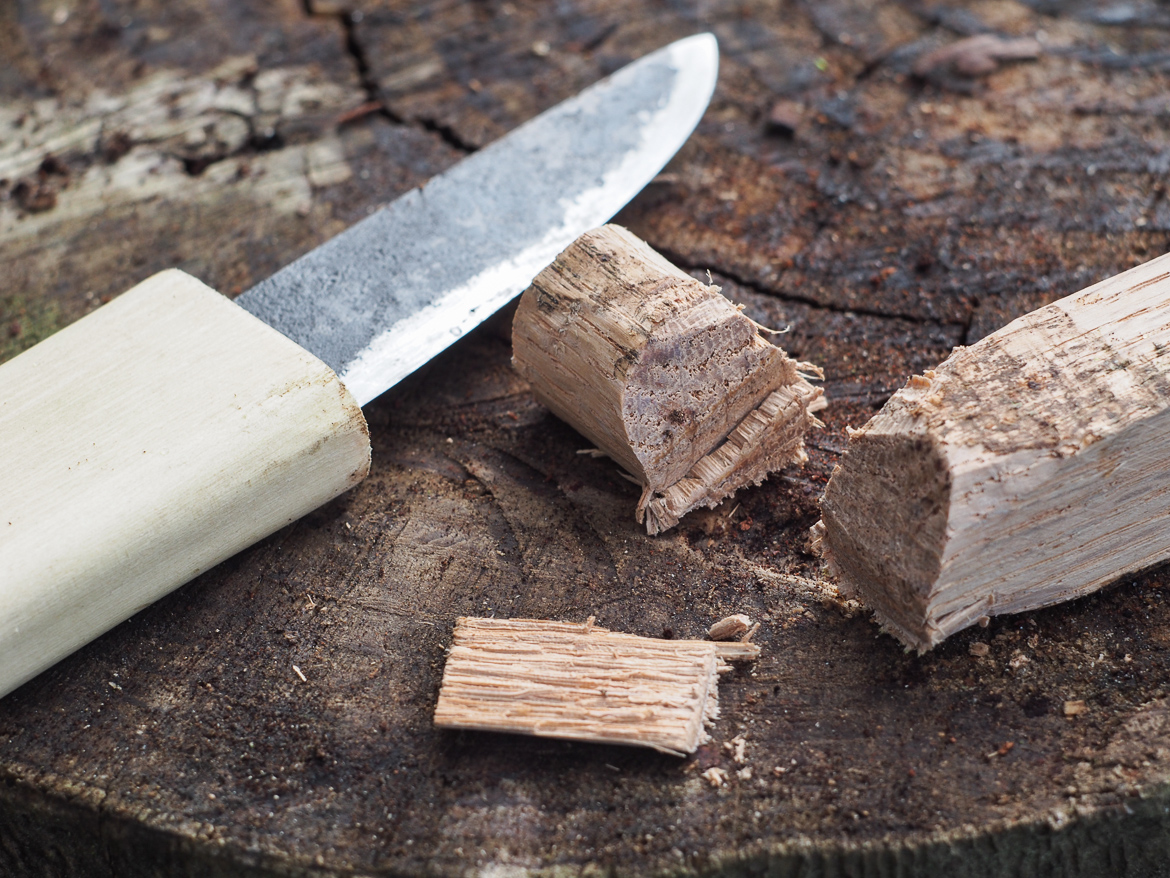
Sokui (Rice Paste Glue) Strength Testing
This is an experiment I did as part of a prototyping project, and was intended to satisfy my curiosity on the performance of sokui (続飯) or rice paste glue. The natural glue contains nothing but delicious Japanese rice and a little bit of water. Usually sokui is used as part of a system that also…
-
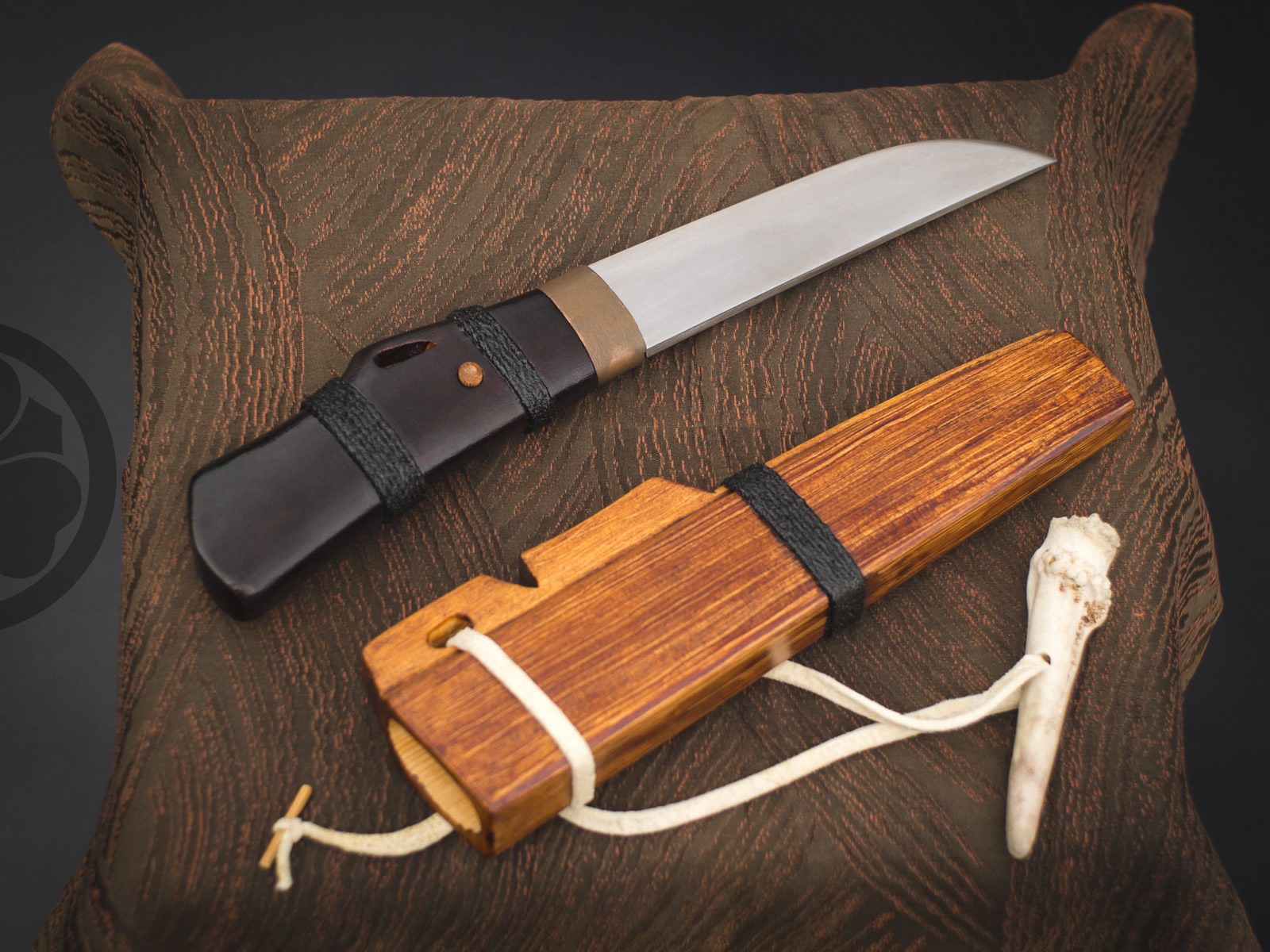
Makiri Style Kotanto
The makiri is one of the traditional knife patterns of the Ainu, an indigenous people of Japan. Makiri are generally mid-sized utility knives and are hung from a belt by a lanyard. They are mounted with wooden handles and scabbards and may be decorated with carvings or incisions, often added by the owner. The most…
-
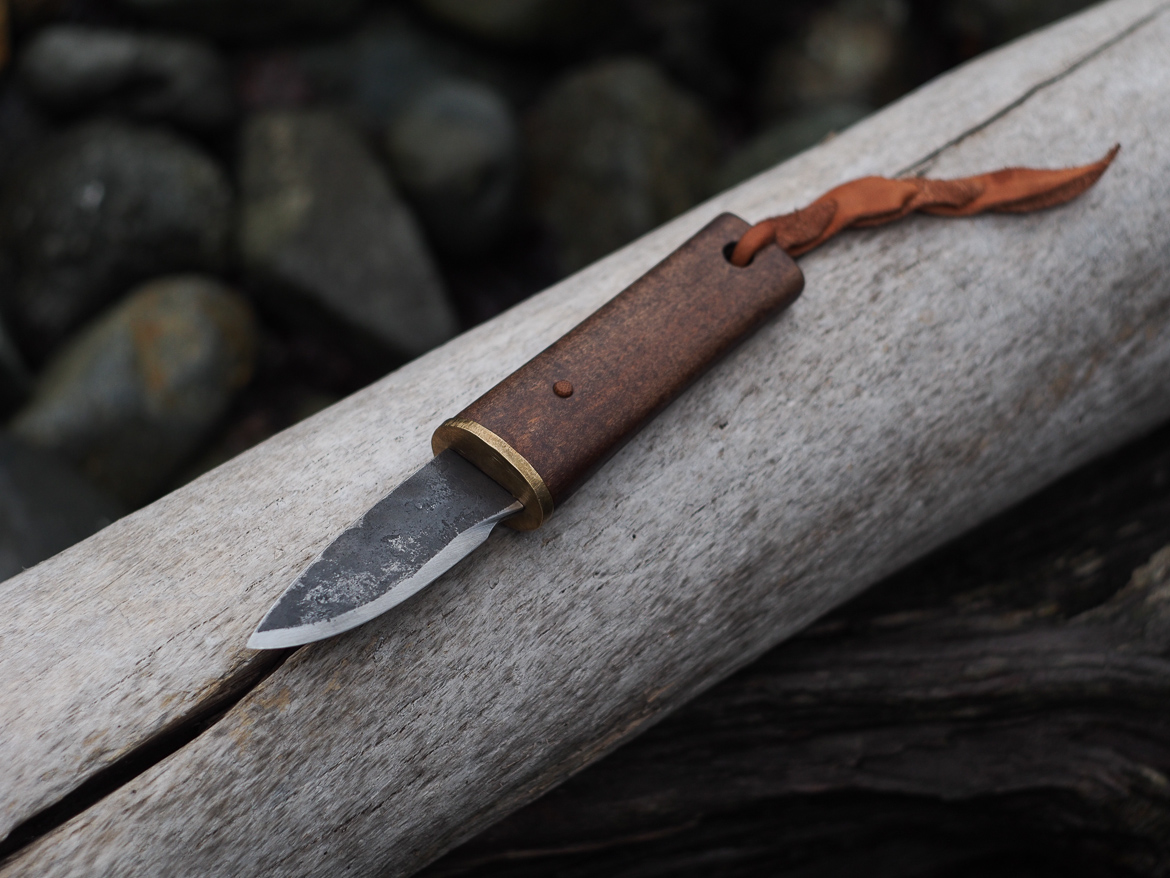
Bullfrog Stream Kotanto
A compact and functional utility bushcraft knife, this clay tempered blade was hand forged from a stone cutting diamond saw blade. Natural texture from fire and hammer marks has been left on the surface of the blade. This piece is one of the first of a series combining the style and size of outdoor knives…
-
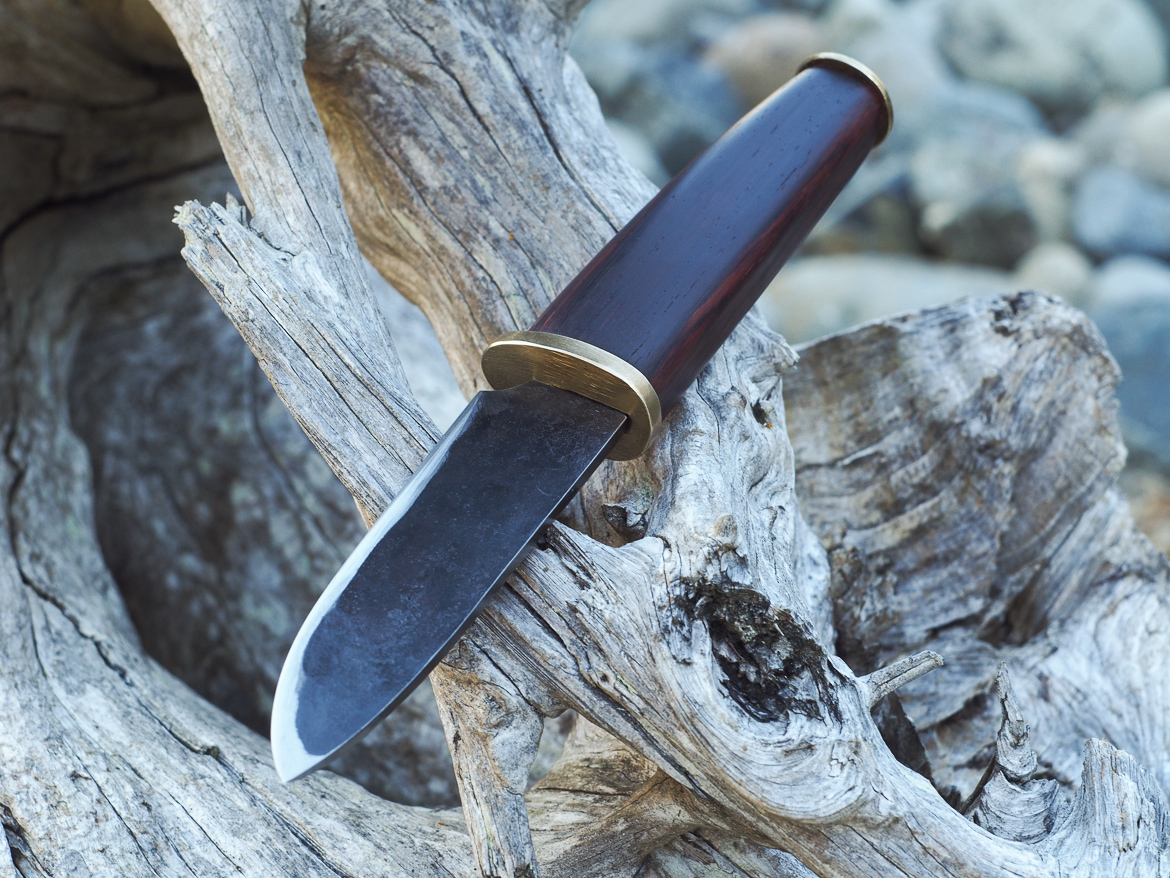
Cocobolo Drop Point
The raw material for this blade was a piece of a large mill saw blade, hand forged and clay tempered. The bronze guard began as a scrap from another island smith, cut off in the making of a large public sculpture in Victoria, and the wood is Cocobolo. A five yen coin from Japan (dated…
-

Forged from Farm Scrap – the Culinary Knife Project
Forging a spring tip cheese knife, along with some finished works from the Culinary Project.